

Why Short-Term Incentive Programs Can Provide Q4 Lift and New Year Momentum
A Q&A with Brian McHugh, VP Client Solutions
We’re past Labor Day and now hyper focused on ending the year with gusto. For many of our clients at Motivation Excellence that means looking at how to meet (or beat) Q4 goals and set themselves up for a running start to the new year. A short-term incentive program can be a highly advantageous way to spark momentum and cross the finish line with energy to spare.
Our VP of Client Solutions, Brian McHugh, answers questions below about why they work, how they work and the program structures that bring the best results.
What do you like about short term incentive programs?
They make noise. A short program, or “spurt,” is a marketing event with a budget (and hopefully bang) behind it. For six to ten weeks, you have a reason to be in somebody’s inbox with something they want to open. There’s excitement and intrigue. In a channel where every vendor is fighting for the same rep’s attention, that’s worth almost as much as the sales lift.
You get a read on your channel quickly, too. In a few weeks it tells you who responds, which distributors actually push, and what your audience cares about. Even a mediocre one is cheap tuition for your annual planning.
And the money is usually sitting right there. Q4 is when unspent co-op and MDF hit their expiration date. A short-term incentive is one of the few things you can stand up quickly, put to work and see results.
What’s the best structure to maximize results in a short amount of time?
1, Pay on growth, not volume. Set each person’s goal off their own prior-year Q4, adjusted for where the market is heading, because a flat prior-year goal demotivates everyone in a down market and pays for the tide in an up one. Flat-rate programs in Q4 mostly reward big accounts for the seasonal curve they were going to deliver anyway. One caveat – this assumes you can see sales at the participant level. Plenty of manufacturers can’t see below distributor sell-in, and then you’re running a claims program and the rules need to be built for that from day one.
2. Keep it simple enough to explain at a counter. IRF’s new channel research found reps are juggling 10 to 50 vendor programs and engaging with maybe half. You win by being the one they understand in sixty seconds. One behavior, one goal, one number.
3. Pay during the program, not after. If the reward lands in January, you ran a rebate with extra steps.
4. Treat communications as half the program. Theme it, put it on a calendar, mix product education in with the standings. Promotion emails get opened at rates your regular marketing never sees. That’s a good chunk of time where you attract attention, so use it to sell why they should buy from you and let the rewards message ride along.
5. And skip the points bank. A ten-week program needs a prize people can picture on day one. That’s the fit for our MAXRewardsYourWay lifestyle upgrade packages – curated bundles at a set value with sourcing and personalized concierge-level attention included, and nothing for your team to manage.
Can spurt programs be part of long-term incentive programs?
Yes. The easiest version is a bonus earn-period inside a program that’s already running. Same audience, no relaunch, a multiplier on one product line for eight weeks.
The other version is the on-ramp. Run the Q4 promo, capture enrollments, and start a year-long incentive program in January with a participant list and a baseline instead of a blank page.
Just watch the cadence. Run one every quarter and people stop selling between promotions. Two or three a year, tied to something real, keeps it honest.
What verticals do best with a short-term incentive?
Anything with a counter. Electrical, plumbing, HVAC, auto aftermarket, building products. Fast transactions, brands close enough to swap products, and a person in the middle who has direct influence with the buyer. That’s where ten weeks is enough time to change behavior.
Direct sales works too. Q4 is when insurance and med device teams are chasing year-end numbers anyway, and the design question there is what you do for the rep who has already clinched or already lost the year. Those are the people who stop being engaged in November.
What’s the best short-term program you’ve ever run?
Years ago, I ran a Surprise Bonus Week for an electrical products manufacturer during the deadest stretch of their year: August. No advance notice. Partners opened their email one Monday and found the best earning opportunity of the year – bonus rewards for getting claims in that week. Communications ran hard the whole time.
The no-notice part had a purpose. Announce an upcoming bonus week and people sit on claims waiting for it. Surprise them and you get the attention without the hoarding.
We weren’t chasing net-new behavior, and we knew it going in. It paid extra for claims most people would have submitted eventually. The job was mindshare in a dead month, and it worked. Claims up, redemptions up, and a bunch of dormant users logged back in to see what the noise was about. We went into Q4 with an audience that had just been reminded this brand shows up for them and sales built from there.
Which is my caveat on everything above about paying for growth – know which goal the program is going after. A growth play gets judged on incremental sales. A mindshare play gets judged on engagement and what it sets up. That week would have looked like a waste on an incrementality spreadsheet, and it’s one of the best programs I ever ran.
Aren’t these just “do this, get that” promotions?
That’s how most get built, which is why most underperform. Your incentives explain your outcomes. Whatever you’re paying for right now is the behavior you’re getting, accidents included. A rebate that pays on volume is a strategy that says volume is all you want.
The best channel programs pay for the behaviors that produce the sale: demos, ride-alongs, training on a new product’s financial story, deal registrations. IRF’s 2026 research found best-in-class programs put 40 to 50 percent of budget toward pre-sale behaviors, and a short window is the right place for them, because behaviors are controllable in ten weeks even when revenue isn’t. Ask a rep to close 20 percent more and you get a nod. Ask him to run twelve demos by Thanksgiving and he runs them.
How much lift can be expected by a short-term incentive program?
This is a highly personal question that no one can answer until they know the program goals, current data and target audience. Be suspicious of any company that makes promises of success without a consultation session and follow-up research.
Potential lift depends on your baseline, your contract mix, and how much discretion the audience really has. The programs that produce real lift pay on growth and behavior changes, communicate to people every week and have measurable results based on performance metrics.
Thanks, Brian, for sharing your expertise on this flexible B2B incentive variation. If you’re a company looking to rev up some excitement through a spurt incentive, now is the perfect time to reach out to our team for a free consultation session. We’re also in the perfect time period to talk about your overall growth and loyalty plans for the next year. With more than 40 years of proven success in the internal sales and channel sales incentive industry, we look forward to being a partner that helps you meet your goals year after year!
Incentive Travel and Meeting Trends Point to a Shift in WorkforceAwareness and Expectations
A Conversation with Cherrie Tebeau, VP, Sourcing & Industry Relations
In our industry, we’re always looking at trends and the “why” behind them. Analyzing this data gives us the ability to thoughtfully and strategically guide our clients as they select destinations, venues and activities for their future incentive travel, meeting or event. Our VP of Sourcing & Industry Relations, Cherrie Tebeau, regularly checks in with a wide variety of supplier contacts to keep up to date with what they’re seeing currently and clock expectations for the future.
In this blog, Cherrie talks about what she’s seeing, why it’s happening and how she helps our clients keep their target audience’s motivation to attend in focus.
What are you seeing with registration and attendance numbers recently?
There is definitely a decline in registration, especially early registration. Late registration is becoming the new norm, even with highly competitive sales incentives. There’s still the desire to be there, there’s just some hesitation that can stem from influences like geopolitical concerns and trying to balance priorities between personal and professional life.
We also see shifting expectations and what’s considered motivational as the newer workforce starts participating in group travel incentives and multi-day meetings. If a destination isn’t aspirational or the on-site experiences aren’t super unique, younger Millennials and Gen Z tend to disengage faster.
With an evolving workforce, what do companies need to consider to capture the interest of Baby Boomers, Gen X, Millennials and Gen Z?
Right now, incoming Gen Zs and outgoing Baby Boomers are roughly equal, totaling 30% of the workforce. Millennials and Gen X are also nearly equal and fill in the other 70% of the workforce. When you take the two youngest generations working today, Millennials and Gen Z, as a group, they account for 54%.
The ages and expectations of each generation are important to consider when we look at guiding our clients toward creating experiences that grab attention, motivate and promote performance improvement.
Today’s workforce isn’t impressed by the perks that once defined luxury incentive travel. There’s a definite shift in budgets from spending significant money on a room gift, where everyone gets the same crystal vase, to a more personalized gifting experience. Upon arrival, let everyone in attendance select their own luxury brand sunglasses, or create their own customized athletic shoes. This is what resonates with most people on an incentive program today, but especially with the younger attendees. Experiences over things is the new standard.
Those experiential elements are very important to carry through a program too.“Wow-worthy” moments that aren’t available to the general public are prioritized more and more. Think private access to a museum, having dinner in the Tower of London, watching an artist create an original piece of art live at an event, enjoying cocktail hour in a catacomb or screening a yet-to-be-released film followed by a Q&A with the director. These are the moments people talk about for years and they’re what motivate experienced incentive travel award winners and hook the rising workforce to want repeat victories.
And let’s not forget that wellness and intentional downtime have moved from “nice to have” to non-negotiable. Whether it’s a morning yoga session overlooking the ocean or simply unstructured hours to explore at their own pace, today’s attendees need time to decompress just as much as they need a unique one-of-a-kind excursion.
Programs that trade the predictable for the remarkable – and the packed itinerary for the purposeful one – will keep people motivated to achieve.
How does our travel strategy team guide clients to ensure full engagement potential across a wide spectrum of attendees?
A great incentive program or national sales meeting doesn’t begin at the airport – it begins long before. Our Travel Strategy Solutions team gets to work in the presale phase, because the decisions made earliest in the process are the ones that shape everything that follows.
We start with a deep-dive client discovery session. Not a checklist, not a template – a genuine collaborative process that asks the critical questions about goals, budgets, culture and measurements of success. From there, we build a solution entirely specific to that client, because no two companies and no two groups of attendees are the same.
This early strategic investment is what allows us to design programs that resonate across a wide spectrum of attendees – balancing adventure with wellness, group experiences with personal freedom, and aspiration with accessibility. When attendees feel like the program was built with them in mind, they engage. When they engage, they push to earn the right to be acknowledged for exceptional performance. And when that happens, the program delivers exactly what it was designed to do – create lasting motivation, increase sales and strengthen valuable relationships.
Any final thoughts you want to share?
As companies plan what makes an incentive travel award or meeting/event successful, keep in mind what’s motivating for the participant and what’s valuable to company leadership. When those come together, that’s when the magic happens.
“Once in a lifetime”-type destinations and experiences are highly motivating for our evolving workforce. They create long lasting personal memories and professional momentum to achieve success again.
Company leadership is looking for measurable results that sustain growth year after year. They want increased sales performance, stronger B2B loyalty, and programs/events with impressive ROI.
Businesses prosper when the people who mean most to their success feel valued. In our programs, sales incentives in particular, that translates to increased performance metrics that more than pay for the reward experience while nurturing the very relationships that lead to sustained success.
Thanks, Cherrie, for sharing your insights. At Motivation Excellence, we have more than 40 years’ experience designing award-winning travel incentives, meetings & events. Our consultative approach lends itself to creating highly personalized solutions that fit each client’s specific needs. If you’re interested in learning more about the strategy we employ to get the most value for our clients, we’d love to set up a free discovery session.
Attention CFOs: Learn Why Sales Incentive Programs Are Long-Term Lifts to Your Bottom Line.
A Q&A with Our VP of Sales, Rhonda Brewer.
Even after an incentive program has completed its first year and has glowing results, we are often challenged by the financial leadership to prove its worth. We get it. There are softer results our program owners can see and feel easily, but accounting is always looking for the hard numbers that show real return on investment in dollars and cents fashion.
We can deliver on both. The anecdotal evidence our sales and marketing leaders hear from customers leads to the accounting proof of incremental gains needed for their financial counterparts. And honestly, the true value of an incentive program we run is the combination of emotional equity and financial gain which creates long-lasting loyalty and evergreen growth opportunities.
Our Motivation Excellence VP of Sales, Rhonda Brewer, has told this tale before and turned doubters on the financial side into cheerleaders repeatedly. In this blog, she answers questions regarding financial accountability and how different types of incentive programs work for different audiences.
Why do you think CFOs and their team sometimes have a hard time embracing an incentive program in the beginning?
Well, they’re the bottom-line people, right? Risk and reward play heavily into their mindset and perhaps they mistakenly think an incentive program is a cost, which is a risk, rather than an investment, which leads to a reward. No matter what the reason is for why, we are able to show them financial modeling before a program even starts and how our program will be built to mitigate risk and maximize reward.
We still might get some pushback, but often, they come around to see that the way we design and operate incentive programs, they pay for themselves with incremental gain, and then some!
The other obstacle we run into is when someone is currently running rebates or SPIFFs and they think they’re adequate ways to engage and create stickiness. We see rebates as very transactional. Do this and we’ll do that. They provide short-term bursts to sales, but lack long-term behavioral changes. A customer will go from one distributor to the next for the rebates each offers. These are really just pricing discounts; a cost with no attributable growth.
B2B incentive programs place value on growing a relationship with customers so they don’t ever feel the need to jump to a competitor for a one-time price break. They’re already getting support, competitive pricing, training and growth opportunities through the incentive you’re running. Plus, the effort put into getting to know their needs puts you ahead because you’re showing commitment, connection and care.
What are your favorite examples of how our programs have been embraced by the C-Suite?
I have two recent stories that make me smile. First off, one of our long-term HVAC clients has a CFO who absolutely supports our channel partner travel incentive. He glows when he talks about the results he sees. It makes me feel great to be able to offer a solution that everyone in the C-suite sees value in.
The other story that comes to mind is a brand-new client in the commercial office furniture space. Even right before leaving for their first travel incentive reward experience to Costa Rica, the CEO questioned the program owner in his marketing department about whether it’s truly a value to their overall business success. The follow up was, “Should we do it again?”
Not only did she have anecdotal stories to share about how our program shifted business to their products, but she was able to show him that because of the incentive the sales team knew exactly who to focus on in each region, which helps with logistics and efficiency. On the program, he was able to hear firsthand from his channel about shifted business and increased engagement.
Their own post-program review showed a more than 400% ROI and in a survey to the independent sales rep participants who earned the travel experience, 98% agreed that the program motivated them to engage more with their company. Even the participants who didn’t earn the reward had 4x more growth than independent sales reps who didn’t enroll at all.
On top of all of that, multi-product sales increased for the ISRs who enrolled in the program, regardless if they earned the travel award. Those stats, and others, have turned the financial leadership of this client’s company into supporters after just the first year.
What are the biggest benefits CFOs should know about when it comes to a well-designed incentive program with Motivation Excellence?
There are a lot, but for our CFO friends out there I’d call attention to these:
- Consistent year-over-year sales gains
- Improved market share and share of wallet
- Increased upselling & bundling of products
- Better business intelligence of channel dynamics
One of the biggest benefits of working with Motivation Excellence is that we design programs that can pay for themselves. I know I said this already in an earlier answer but it’s important to call out again.
Our programs also produce well-trained product ambassadors! Participants get rewarded for continued product education, as well as increases in volume, among other things, so our clients end up with an outside crew of dedicated and loyal influencers who have no need to recommend a competitor anymore.
We offer two broad categories of incentive solutions: travel and reward points. Is there one that’s better than the other for a CFO who is now interested in exploring this avenue?
It really depends on the industry, audience and goals of the business. When we start working with a client, we look at their industry, what competitors are offering, budget parameters and the behavior change the program needs to address. The goal is to create an effective program that solves each clients’ unique needs. The reward vehicle is secondary to the program structure and long-term effectiveness. Of course, the rewards are the fun part to talk about though!
When looking at budget, a points-based program can offer increased risk mitigation and budget stability because more elements are under our or our client’s control. Travel incentive programs introduce some less controllable variables like airfare prices and weather concerns which can make an overall budget less predictable. Our travel team experts are skilled at mitigating those risks, but they do still exist. No matter what the reward is, we balance any risk by how we set the rule structure, like making sure participants hit a specific goal before unlocking access to the reward.
Reward point incentive programs offer a lot of flexibility. Travel incentive programs offer a ton of inherent motivation and the ability to connect in person with the people who mean the most to the success of your business. With our participant activity tracking platforms, real-time reports can offer detailed business intelligence, trends and projections for both types of programs. This also allows clients to tweak their programs to mitigate unexpected struggles or maximize program gains.
Both solutions offer the ability to move away from a transactional relationship and toward a committed connection, which always translates to longer term loyalty. With our focus on personalized rewards there are many ways with either solution to make sure the program is successful for you and truly meaningful to your participants. Imagine people using reward points to help pay for college tuition or renovate a kitchen. Think about giving people the opportunity to travel to places they only dreamed of in the past. You can see how B2B or internal sales incentives are motivational and emotional, rather than transactional! Loyalty and long-term gains for your company follow.
Thanks, Rhonda, for sharing your insights into sales incentive programs and why CFOs should take note!
To wrap up this blog, here’s a recent stat for our numbers-loving-people from the Incentive Research Foundation: 41% of top performing companies strongly agree that they look to dedicated outside partners for incentives, as do 34% of their comparators. We can go into the reasons for this in a follow-up for those interested.
If that high percentage, in addition to our Q&A with Rhonda, has you intrigued, let’s connect soon to set up a consultation. We have more than 40 years of time-tested solutions at the ready to help you Inspire Extraordinary Performance with the people who mean the most to the success of your business!
2026 Considerations for Americans Traveling in the US, UK and EU
2026 is a year of big events, new travel fees and more travel documention to secure for Americans traveling both domestically and internationally. Our travel team at Motivation Excellence is here to help save you some headaches, time and maybe a buck or two.
Let’s break it down!
Big Events
Beware if you’re traveling around the cities hosting the Olympics and World Cup games. Plan for extra time in lines at airports, on the road, and even at your favorite restaurants.
- The Olympics and Paralympics
It’s a winter Olympics year and for the first time ever it’s being hosted in TWO cities. Both Milan and Cortina, Italy will be holding medal events. Both cities are in the northern region of Italy, and they’re roughly 250 miles apart. Milan will be the home to the opening ceremony and ice sports, while Cortina and surrounding areas will be home to snow sports. The closing ceremony will be in a third location, Verona, a city between Milan and Cortina.
Dates: February 6-22 for the Winter Olympics
March 6-15 for the Paralympic Games
Schedule of events: 2026 Winter Olympics
2. FIFA World Cup
It’s also a World Cup year, with North America hosting the month+ long series of games. Eleven cities in the United States, 2 in Canada and 3 in Mexico will host games and the accompanying hoopla.
Dates: June 11 – July 19
Schedule of games: 2026 World Cup
For both the Olympics and the World Cup, our travel team warns of several impacts on travel whether you’re going to the events or not:
- Air travel: travelers might experience higher fares as demand increases, with even non-host cities seeing pressure as aircraft are redeployed to high-demand markets
- Hotels: host cities will see capacity reached quickly and will likely implement minimum stay requirements and non-refundable terms, also look for rate hikes, even in surrounding regions
- Congestion & Infrastructure: all modes of transportation will be busier, services will be strained and security will be tighter – all adding to overall travel times and tourist lines
Extra Travel Documentation
Whether you’re flying within the United States, or to the UK or the EU, you’ll need to make sure you have the correct IDs and pre-approvals before you get to the airport. Be prepared for more biometric data collection wherever you travel, as well.
- TSA ConfirmID
If you still have not switched to the Real ID, and you forget to travel domestically with your passport, you’ll be required to pay $45 to go through the TSA ConfirmID system. It’s easy to do, but the fees are per person, so traveling with a family of 4, could create an unexpected increase in the trip budget.
- Visit the TSA website
- Pay the $45 fee per traveler
- Keep the receipt and show it at the airport
- A TSA officer will guide you through the final steps of the process at the airport
This will be required starting February 1, and be advised that the portion at the airport can take up to 30 minutes, so plan accordingly so you don’t miss your flight.
2. ETA: Electronic Travel Authorization
Also starting in February, The UK’s pre-approval requirement for travelers flying into UK airports will kick in. This is not a visa. Eligible visitors without an ETA will not be able to board their transportation and cannot legally travel to the UK as of February 25, 2026. You need to apply at least 72 hours before your travel date. Even if you’re just connecting through the UK, if you’re required to pass through passport control, you’ll need an ETA. There is a small fee, but it’s good for two years once you’re approved.
3. EES: European Entry/Exit System
The Entry/Exit System (EES) is an automated IT system for registering non-European Union nationals travelling for a short stay, each time they cross the external borders of the countries participating. It started rolling out in October of 2025, with full implementation expected by April 10, 2026. Make sure you have enough time between connecting flights to accommodate this extra data collection. Also, make sure you’re not planning to overstay the maximum days allowed in the EU since this was developed to track just that.
4. ETIAS – European Travel Information and Authorization System
This process will be required for Americans flying to one of 30 European Union countries. There will be a small fee that’s paid online during the application process. This is not in effect yet; however, it is expected to be sometime in the last quarter of 2026.
Prepare Now, Enjoy Later
Traveling is fun! Seeing new places close to and far from home is priceless, especially when you share it with loved ones. Being prepared long before you pack is critical to planning a minimally stressful travel day. Our entire team at Motivation Excellence hopes this information helps your next travel adventure be full of great memories that create the desire to continue exploring our amazing world!
From Transactional to Transformational: Building Channel Partner Loyalty Through Strategic B2B Incentive Programs
In the world of channel sales, the incentive SPIFF is a classic. It’s straightforward: sell X product this quarter, get Y as a reward. It’s a tool everyone knows, and for generating a short-term revenue spike, it can work well. Short-term incentives should be fun! Having them as part of a larger incentive strategy is a great way to boost energy and motivation for special rewards. Just don’t let them fall into feeling like they’re just a transaction. A great incentive is going to build interaction between your company and your channel partners. Interaction can grow loyalty, which elevates long-term revenue potential.
When you look at your overall channel partner incentive strategy be sure to intentionally design elements that assist the transformation of business associations into valued partnerships. If you’re willing to build an incentive program for your distribution chain, do it in a way that builds deeper loyalty, aligns long-term goals, and creates an ecosystem where both you and your partners grow stronger together. Always go for the transformational over the transactional for the best success!
The High Cost of Transactional Relationships
Transactional incentives have inherent flaws:
- They are forgettable: Without the right reward, there’s no lasting memory or emotional connection to your brand when it’s over.
- They encourage cherry-picking: Partners may focus only on incentivized products, neglecting others that are crucial to your broader portfolio.
- They attract mercenaries, not missionaries: You’ll draw partners motivated solely by the next bonus, not those who believe in your brand and its solutions.
This model creates a manufacturer-client relationship, not a strategic alliance. To build a loyal channel, you must give partners a reason to choose you as their primary focus, far beyond any single offer.
The Pillars of a Transformational Incentive Strategy
Transformational incentives are less about a payment and more about an investment—an investment in your partner’s success. They are designed to provide value that lasts long after the reward is earned. This is where B2B incentive programs evolve from simple “do x, get y” equations to strategic tools meant to foster stronger partnerships.
1. Add Emotional Value by Curating the Right B2B Rewards
The most powerful incentives offer value that cash or discounts simply cannot buy. Think of access, exclusivity, and growth. Instead of a credit on the next order, consider:
- Elite Tier Access: Create an exclusive “inner circle” for top performers, offering them the first look at new products, dedicated support, and co-branded marketing materials.
- Direct Access to Leadership: Reward top partners with an annual summit or retreat where they can network with your C-suite and product engineers. This isn’t a vacation; it’s a strategic advantage for their business.
- Business Development Investments: Offer to fund a local marketing campaign for them or provide professional services like training or a charitable reward.
These B2B rewards demonstrate that you are invested in their business’s health, not just your own sales figures. This builds trust and loyalty rather quickly.
2. Incentivize Behaviors, Not Just Outcomes
While consistent revenue growth is the ultimate goal, the behaviors that drive it are what you’re really motivating with a channel sales incentive. Consider offering rewards for:
- Obtaining new technical certifications through your company
- Completing steps-to-the-sale training
- Generating sales through co-marketing efforts
- Successfully implementing a new solution with a customer
This aligns your partners with your entire business strategy, creating better-educated, more capable advocates for your brand.
3. Foster Connection and Community
Isolation is a killer of momentum. Transformational programs create a sense of belonging and healthy competition. This can be achieved through:
- Performance Leagues: Publicly (but respectfully) recognizing top performers across various categories—not just overall sales, but most improved, best new customer acquisition, etc.
- Partner Advisory Councils: Inviting influential partners to provide feedback on your products and programs, making them feel heard and valued as true collaborators.
- Peer-to-Peer Learning: Facilitating events or webinars where top partners can share best practices with others, strengthening the entire network.
- Developing best practices –Identify approved best practices and motivate others to adopt them into their activities.
We have several clients who do yearly B2B networking events for their top customers. Their customers earn their way through increased sales and get rewarded with an all-expenses paid experience with other top performers and company executives. This has created really strong bonds that motivate future performance increases year after year!
The Result: Partnership as a Competitive Advantage
When you make this shift, you stop being a manufacturer and start being a partner. The relationship is no longer about “What did you do for me this quarter?” but “How can we win together next year?”
The benefits are profound:
- Increased Share of Wallet: Loyal partners will prioritize your solutions over a competitor’s equivalent offering.
- Reduced Churn: Partners invested in a relationship are far less likely to jump ship for a minor price difference.
- Authentic Advocacy: They become genuine evangelists for your brand, attracting other high-quality partners and customers.
- Sustainable Growth: You build a foundation of predictable, recurring revenue driven by a dedicated channel eager to outperform themselves year after year.
Building this level of loyalty doesn’t happen by accident. It requires a deliberate strategy and a partner who understands how to design B2B incentives and loyalty programs that resonate on a deeper level. It’s about crafting an incentive program that is less a cost center and more an investment in your channel’s future—and yours.
Ready to transform your channel partnerships? Our expertise lies in designing strategic incentive programs that build unwavering loyalty and drive sustainable growth. Let’s move beyond the transaction and build something lasting together. Contact us to learn more about how we can plan and design you customized B2B rewards program.
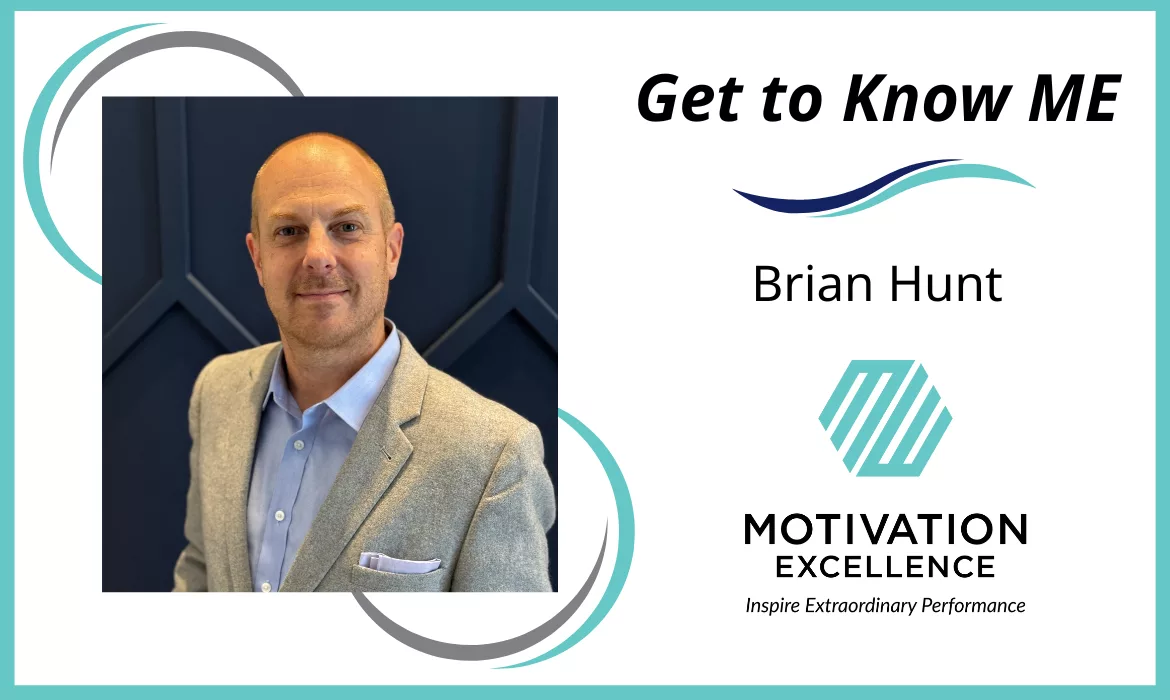
Get to Know ME with Brian Hunt
We love getting to know our colleagues, and lucky for the rest of the world, we publish what we learn! This month’s Get to Know ME feature is on a new member of our sales team, Brian Hunt. Brian filled out the written answers below and sat down for a short video interview. Thanks Brian, for allowing us to learn more about your love of skiing and your passion for travel!
What’s your current title and how long have you been in the incentive industry?
I am currently a Strategic Account Director and I have been in the industry for over 25 years, starting my career as a travel director where I learned all aspects of our industry.
What do you like about your job?
Everything! Travel is such an amazing opportunity to learn and engage with different cultures, norms and destinations. That is why my passion for delivering amazing incentive programs is so strong, knowing you have impacted an attendee on a trip and have introduced them to something new and different. This quote by Jack Hanna says it all, “The world is the true classroom. The most rewarding and important type of learning is through experience, seeing something with our own eyes.”
What’s something you want to share about the people you work with at Motivation Excellence?
In my short time at Motivation Excellence, I’ve seen how passionate and engaged and the customer-first mentality shines through.
What’s a specific moment in your history that always stands out as a defining moment, and why?
The day I married my wife was a defining moment—partly because I officially outkicked my coverage. More importantly, it’s when I truly gained a partner in life. Being responsible for more than just myself changed me. It pushed me to grow, to show up fully, and to keep becoming a better version of myself. Our relationship keeps me grounded, keeps me laughing, and reminds me to invest in the people around me—whether that’s at home or at work.
What’s an unknown or odd talent you have?
I love to cook, not really unknown or odd, but it feeds our family and being in the kitchen or at the grill is my happy place.
What motivates you to accomplish things in your life (work or personal)?
My family motivates me more than anything—they’re at the center of why I do what I do. I’ve also always had a bit of a servant mindset. I genuinely like helping people.
What do you enjoy doing outside of work?
I love spending time outdoors with my family, either coaching or attending our kids’ sports, camping, hiking, and skiing down the side of a mountain any chance I can get.
One thing that always makes you laugh is?
A good dad joke.
What’s a bucket-list item you can’t wait to cross off?
Skiing in Japan!
Anything else you want to share?
I have 3 kids (2) girls, (1) boy, 2 dogs (goldendoodles) and one cat.
Focus on These Three Areas of Engagement to Help Your Channel Incentive Program Succeed
Channel incentive programs can increase attention to your company, improve your loyalty stats and drive revenue increases year over year. One of the biggest indicators of a healthy program is the amount of engagement it gets. In the incentive industry, engagement encompasses a variety of elements, like:
- participant activity trends
- performance tracking platform visits
- email and click through open rates for participants and internal teams
- interactions with the sponsoring company
- reward redemptions
- survey responses
- training module completions
The higher the engagement, the more successful a program is. When engagement metrics start to fall, it’s a big red flag that program outcomes will also take a dive. In our 40-year history as a leading performance improvement agency, our experts at Motivation Excellence know how best to keep engagement high.
Here are three areas we recommend focusing on:
1. Internal Drivers
You can design an amazing incentive program, but if your own people don’t buy in, you’ll have a hard time getting adoption from your participants. Executives and sales teams must be engaged from the start and carry a level of enthusiasm that positively infects the channel partners participating.
- Executive team – make sure they know the goals and benefits, and have a working knowledge of the “why” and “how” of the program. Having access to this level at your company can be a selling point to your channel partners, especially ones who are already showing loyalty to your products.
- Sales team – an incentive program is a great tool for this group to use to strengthen connections with current customers and introduce your company to prospects. If you don’t have engagement with this group, you’ve lost your most direct pipeline to your participants. Including them in your reward structure is one way to increase their vested interest.
- If you’re running a group travel incentive program for your channel partners, reserve spots for the sales team members whose customers are bringing in the best performance.
- If it’s a reward points program, award a percentage of participants’ point earnings to their sales representative.
2. Channel Partner Players
Obviously, this is the group that needs to be the most engaged. How to grab and keep their attention is multi-faceted. Everyone likes to receive information in slightly different ways, so we always recommend using a variety of elements in an incentive program communications campaign. Regardless of how you get out the information, we suggest a regular cadence, using a consistent voice.
- Emails – this is a standard part of any engagement campaign. Some people love ‘em, others don’t read ‘em, but it’s the easiest way to communicate and track delivery stats. We use sophisticated software to increase effectiveness from A/B testing that helps determine the best time to send an email and also generates robust engagement metrics.
- Less is more when it comes to words
- Give a personal performance update (percent to goal, accumulated reward points, leaderboard position)
- Highlight the destination for a travel incentive, or a creative redemption idea for reward point programs
- Mail to the home – a postcard, flyer or brochure to the home introduces the incentive to the whole family. Suddenly your participant has a cheering section at home!
- Beautiful photos and varnish techniques are eye candy
- Print pieces are seeing a resurgence because people have email fatigue
- Add a small, useful gift item that keeps your logo in view daily
- Videos – there are people who prefer to hear and see, over read. This is particularly effective to give a program overview, a tour of the performance platform or a sneak peek at a destination.
- Keep it short – less than 2-minutes is ideal
- Use your executive team – a message from the CEO garners attention
- Product training is a great topic
- Performance Tracking Platform – it’s a one-stop-shop for everything related to a program and an instant way to get a glimpse into how a participant is tracking toward goal.
- House everything from program rules to all the communication elements listed above
- Personalize for each participant
3. Help with Marketing
All of our clients have internal marketing teams who are great at what they do.
All of our clients have internal marketing teams who are great at what they do. Many marketing departments have a lot on their plate day to day, though. Adding incentive channel marketing to the mix can sometimes get overwhelming, and we’ve seen it fall through the cracks, or lose effectiveness because messaging isn’t quite on point for an incentive, or lacks a tiered, targeted approach. A silent program does not live long, so it’s critical to have consistent messaging to keep everyone engaged.
We are often an extension of our clients’ marketing team. Our creative department has vast experience in creating content and executing an engagement campaign so that the messaging is motivational, the timing is exact, and relevant data is collected to ensure consistent delivery. Graphics we create follow brand guidelines and our marketing contact always has final say on what goes out. Whether we are used to create a program logo or an entire performance tracking website, we ebb and flow based on what’s needed.
All the Moving Parts
There are so many crucial elements to building a successful channel incentive program in addition to engagement. Important areas include rules, reward offerings and data updates, which can range from daily to monthly. Even if you get all of these pieces to fit nicely, if you don’t find the engagement piece, you’re left with an unfinished puzzle, which is frustrating at best.
Partnering with an experienced company may be the most important element of all. The payoff for running a well-designed channel partner incentive program can lead to increased sales and loyalty for years into the future. It’s truly an investment in your company’s overall success. Connect with us to learn more about how we can help you design a program you and your channel partners will be excited about from day one!
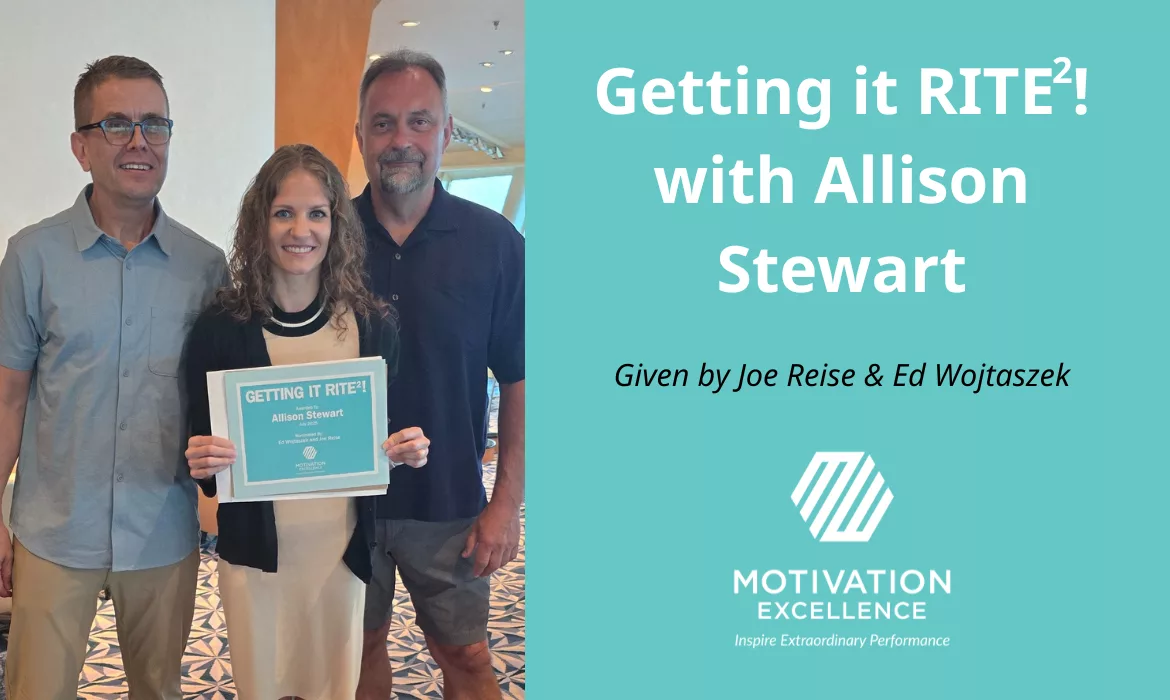
Recognizing a Stellar Teammate at Motivation Excellence
Getting it RITE2 with Allison Stewart
At Motivation Excellence, our core values are Respect, Integrity, Trust and Exceeding Expectations. When one of our colleagues exemplifies those core values, we like to acknowledge it publicly. We recently had two people nominate the same coworker for special recognition. Congratulations Allison Stewart!
Ed Wojtaszek and Joe Reise work in two different departments, but both share a long tenure at Motivation Excellence: more than 25 years each. So, it’s safe to say, they have worked with a large group of people over the years and one in particular is standing out.
“In just under two years, Allison has demonstrated exceptional dedication to her work and brings an infectious, positive attitude to everything she does,” exudes Ed. “She has successfully handled tasks across multiple departments and played a key role on several company committees and special events teams.”
Ed adds how Allison is quick to volunteer and when it comes to areas like recycling and sustainability, she quietly leads by example.
Joe concurs, adding that she exhibits an “above and beyond” work ethic, collaborates on projects across departments and continues to assist on streamlining processes, which is always a big undertaking.
Allison says she’s very flattered by Joe and Ed’s comments and being nominated for the RITE2 award by her peers.
“It’s meaningful because I look up to Ed and Joe since they’ve been with Motivation Excellence for such a long time and have broad industry experience,” explains Allison. “I wasn’t expecting this at all. Quite a nice surprise!”
Our RITE2 award includes a certificate and monetary reward. Allison says she plans to use the latter to help purchase an in-house food recycler to help limit her family’s impact on food waste in landfills. Sounds like an amazing way to keep leading by example. ?
4 Reasons a Channel Incentive or Loyalty Program is a Key to Success in a Challenging Economy
For many businesses, it’s a natural response to pull back on spending in the face of an adverse economic climate. Right now, we’re living through a challenging economy with tariffs and foreign country relationships in flux daily. While cutting back on spending within your sales and marketing budgets might feel like the right thing to do, there are concrete reasons why now is not the time. Instead, it’s critical to show your B2B customers just how much you value them; and our team at Motivation Excellence has the data to back that up. Below are four reasons why we suggest implementing a channel partner incentive or B2B loyalty program in today’s economic environment.
1. Economic Downturns Are One of the Best Times to Capture Market Share
When business slows down, decision makers have to decide if they want to:
- Cut back on spending enough to still turn a profit
- Stop investing and spending, hunkering down in a “wait it out” mindset
- Go on the offense and try to grow through the turbulence
Years of experience have taught Brian McHugh, VP, Client Solutions at Motivation Excellence, that businesses that come out ahead more often choose the last option.
“There are multiple studies spanning decades that show firms maintaining or increasing marketing spend during recessions recover faster and even outperform competitors,” says McHugh.
“There’s a popular industry adage that says, ‘When times are good, you should advertise. When times are bad, you must advertise,’” he adds.
McHugh advises that incentives are more powerful than “just marketing” because they factor in sales growth and growing market share.
Implementing a B2B loyalty or channel partner incentive program now, when competitors are pulling back, is a great way to:
- capture market share
- strengthen relationships
- build momentum for the eventual upturn
“When the economy rebounds, the customers you took care of in the lean times will take care of you because you’ve demonstrated commitment, which creates trust and leads to loyalty,” McHugh imparts.
A longtime electrical supply client at Motivation Excellence experienced this firsthand with an incentive program that spanned more than two decades and saw growth in up, flat, and down markets during that time.
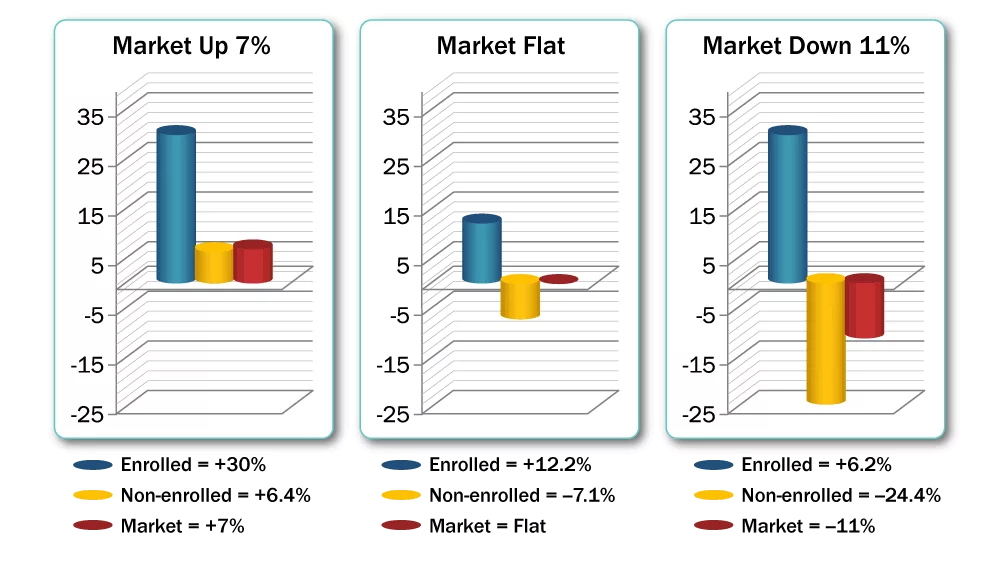
Their ROI was more than 200%. They saw an increase in market share and built a loyal customer base. Working with vendor partners helped elevate the budget and the opportunities for their customers. For the full story on this client and their results, check out the case study on our website.
2. Investing in Relationships Protects Your Current Customer Base
Here’s a simple truth: it’s easier to retain and grow existing accounts than to win them back after they’ve moved on. One of our building supply clients calls this “relationship equity.” We’ve worked with this company for more than a decade on a loyalty-driving incentive program that culminates in an exclusive, all-expenses-paid, four-day event that includes world-class entertainment, access to preferred vendors showcasing the latest innovations, training and networking sessions, and small group activities.
“When the economy tightens and customers become more price-sensitive, programs like ours become even more valuable. It allows us to invest in loyalty without relying on price cuts. This premium, relationship-based benefit reinforces long-term value – and that resonates in any economic climate,” reports Natalie, a marketing manager at the above referenced building supply client.
Natalie says even when economic or global issues may alter business strategy, the focus of their loyalty program remains the same.
“It’s about delivering value beyond the business transaction. Especially in uncertain times, experiences like this offer a powerful way to reinforce connection, stability, and appreciation for our customers.
“It’s not just about points or perks; it’s about creating an emotional connection and a sense of belonging. In a growing industry, where customers can feel like just another number, this program reminds them that they’re seen, valued, and essential to our success,” Natalie extols.
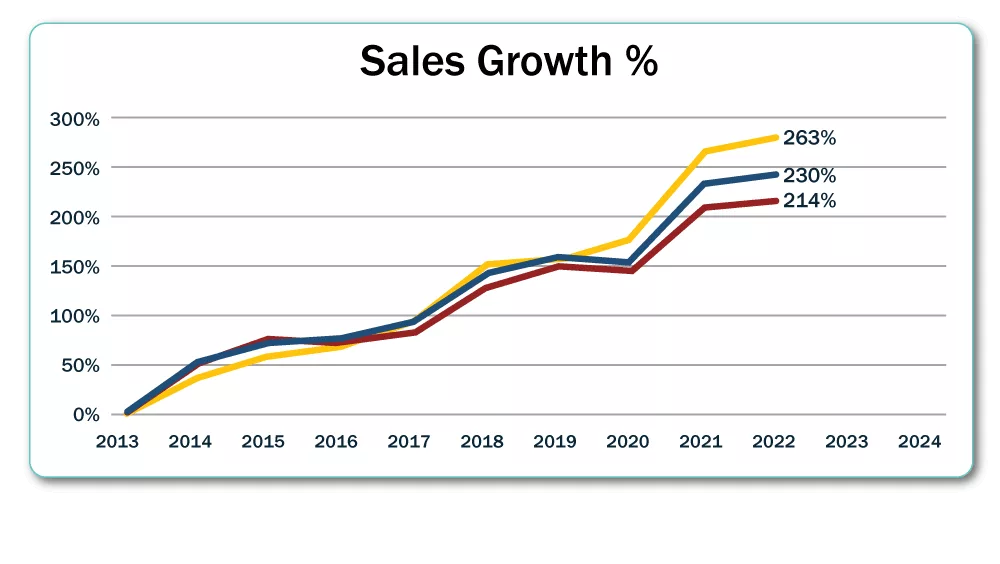
Their sales growth has averaged 230% over the tenure of the program, which is still operating today. To see more about this company’s success with their loyalty event check out the case study on our website.
Increases in Sales Growth
214% = Median growth
230% = Average growth
263% = Top 25 average growth
3. They Can Pay for Themselves
If you’re still not sure you can afford to start a channel partner incentive or loyalty program, this should get your attention. The incremental gross profit generated from customers’ increased purchases pays for the cost of the program and contributes to overall bottom-line margins. Read that again.
How does this work? Our team does a deep dive into your:
- Goals
- Challenges
- Company & industry data
- Target audience
- Reward preferences
Your company wants to motivate behavior change within your channel—most likely to increase sales and loyalty. You might be one of several companies in your market vying for the same channel customers. We look at industry trends. We look at your product margins and individual customer sales data if available. We consider what type of rewards you want to offer; for instance, a group travel experience or reward points your participants can use for almost anything. (There are so many ways to reward people, truly.)
Once we have all the pieces, we can come back with recommendations and models that outline how much you need to increase your sales to pay for the program. This leads us to creating goals for your customers. The key here is the goals must be attainable, but not without extra effort, which is why the motivation (or type of reward offered) is so important.
Our electrical supply client mentioned previously employed an evergreen rule structure* that drove incremental sales growth year over year. They offered a tiered reward structure with the top performers earning a group travel experience with company executives and preferred vendor partners.
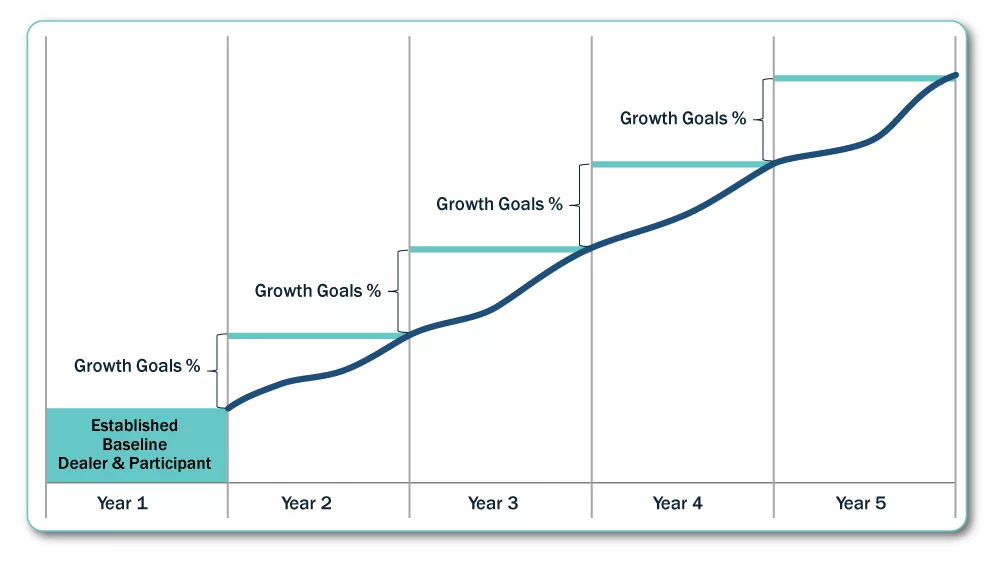
Once earned, the motivation to continue landing in a top spot added to the momentum. In addition, accelerated reward opportunities kept participants engaged and committed to meeting and beating program goals.
*With the evergreen program structure, participants created a sustained growth pattern year after year.
4. Incentive Programs Are Differentiators
Sought-after channel customers often want, or even need, a reason to buy from you, rather than one of your competitors. They might ask, what’s in it for me and my company to stay with you or jump to you?
Offering an opportunity to earn rewards like travel, merchandise or special event tickets can be a persuasive approach, especially because it feels “free” to them. It’s a business relationship with a personal gain. It becomes a part of your company’s overall value proposition with your customer.
“Industries with competitive distribution, like ours, give customers more options, and that’s exactly why loyalty can’t be taken for granted. We have to continually earn it. Our loyalty event helps us do that in a meaningful way while setting us apart from the competition,” continues Natalie.
“None of our competitors offer loyalty events at this level,” she says. “The event has become a cornerstone of our company culture. Customers talk about it all year long. It’s a celebration, yes, but it’s also a statement of how deeply we value our partnerships with our customers.”
Rewards alone can take you a long way with your channel partners, but there are additional benefits that really enhance a trusted relationship. Best practice discussions and product trainings are two additional ways to demonstrate your commitment to the success of your customers’ businesses. When you both grow your businesses together, the relationship is bound to grow too.
“With our programs, we want to drive buying behavior changes within a channel which then leads to lasting, mutually beneficial relationships. Once there’s an emotional connection, loyalty to your brand follows. Our loyalty and incentive programs foster a bond that will see positive returns well into the future,” says McHugh.
Channel partner incentives and loyalty programs are proven to effectively generate a boost in sales, as well as strengthen relationships within your distribution channel. You now know why they’re important and how they can help a business even in questionable economic conditions.
Let’s connect to discuss your unique situation. Our team is full of experts in this nuanced industry. We start from scratch with each client to drive the results you want to see.
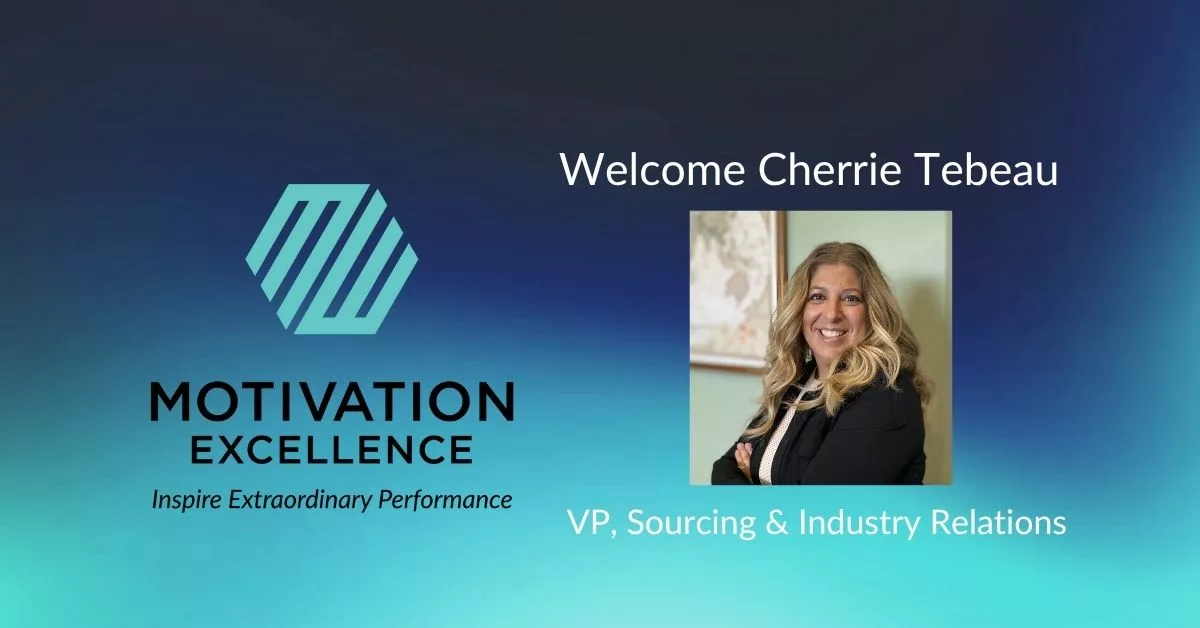
Motivation Excellence Welcomes Cherrie Tebeau in New Role as VP, Sourcing & Industry Relations
We are excited to welcome a new member to our leadership team this week! Cherrie Tebeau is joining us in a brand-new role as VP, Sourcing & Industry Relations. Cherrie’s extensive background in the incentives industry will benefit everyone at Motivation Excellence, including clients, supplier partners and internal colleagues.
“She is highly respected in our space. Bringing her on board will deepen our already strong vendor partnerships, giving our clients the best pricing and most creative solutions to enhance our programs,” says Bob Graham, President & CEO.
In her 25 years in our industry, Cherrie has held positions in sales and travel buying on the incentive agency side of things, as well as procurement and contract negotiations for a destination management company.
“We are investing even more in our industry relationships through creating this position and filling it with Cherrie. She will be a huge benefit to our existing travel team and all of our clients,” adds Brad Hecht, Sr. VP of Travel & Chief Travel Strategist.
Graham envisions Cherrie’s role as one that will focus on how we provide and position solutions that will elevate our clients’ overall experience.
“Augmenting our travel sourcing team and contributing subject matter expertise during the proposal process will bolster our sales team. Having Cherrie dedicated to building new supplier partners and sustaining our current ones will have a positive effect for our clients through expanding options and ideas,” Bob explains.
Cherrie says she’s excited about joining the Motivation Excellence team because of our outstanding reputation in the industry.
“When I started sharing the news with my industry contacts, the responses I got were overwhelmingly positive regarding Motivation Excellence. That certainly makes the transition for me very exciting and positive,” Cherrie says.
To hear more about Cherrie’s thoughts on being a new part of the Motivation Excellence team, watch this short video.

