

End the Year Strong: How Short-Term Sales Incentives (SPIFF) Can Boost Q4 Results
Q4 is when most teams take a hard look at year-end targets and figure out how to close the gap while there is still time. A short-term sales incentive, often called a “spurt” or SPIFF, is one of the fastest ways to close the gap before the quarter ends.
These programs work because they narrow the focus down to a single goal, whether that means:
- Picking a SKU or two with high margins to promote
- Targeting specific regions or territories
- Holding a competition for new and upsell business wins
- Setting a team goal for max collaboration
With more than 40 years of incentive program experience, we’ve seen how well these Q4 programs perform. In this article, we’ll draw on that expertise, as well as insights from a Q&A with Brian McHugh, Motivation Excellence’s VP of Client Solutions, to break down how short-term sales incentives can boost Q4 results.
Setting Up Your Short-Term Incentive Program for Success
A short-term incentive works because it is concise. It targets one behavior, for one group, for a short window, instead of trying to boost all metrics at once. With this in mind, here are some aspects to consider for maximum results:
- Set a single, specific goal: Keep the target straightforward and achievable within the timeframe, whether that is a SKU push, a territory number or a new-business count.
- Keep it simple: If people can’t understand how they’ll benefit from the program in 60 seconds or less, it’s too complicated ( Incentive Research Foundation, 2026).
- Communicate throughout: A program that goes quiet midway loses participants long before the deadline. Regular updates on standings and progress keep the goal front of mind.
- Offer personalized rewards: A tangible, personalized reward works better for short-term incentives. Points that can be used for something truly meaningful to the earner can also motivate results.
The programs that consistently work share three habits:
- They reward growth and behavior change instead of volume alone,
- They stay in regular contact with participants instead of going dark mid-program,
- And they build in a way to measure what actually happened .
Reward choice sits inside all three of those habits, which is exactly where a short-term incentive earns its “lift.” Learn more in-depth benefits about spurt incentives from Brian McHugh in our Q&A article: Why Short-Term Incentive Programs Can Provide Q4 Lift and New Year Momentum.
Once the incentive structure is right, the next step is choosing a reward participants actually want to work toward.
Offer Rewards People Are Motivated to Work Toward
Now that the goal is set, it is time to focus on the reward. A short-term sales incentive only works if the participants can immediately picture what they are working toward. While we find points-based programs to be beneficial in a number of circumstances, short-term incentive programs need a tangible, motivational reward from launch to grab maximum attention.
Motivation Excellence offers a wide range of personalized rewards. For short-term sales incentives, two options from our MAX line stand out. Both carry low overhead, launch quickly and are easy to promote to participants.
1. MAXRewardsYourWay

MAXRewardsYourWay is a curated lifestyle package reward. It gives winners a personalized, tangible upgrade without blowing past a set budget. Packages start at $2,000 and include sourcing fees and concierge shopping support, which keeps admin costs low. Each package can center on travel experiences, fitness gear, culinary upgrades, home upgrades, tech or event tickets.
Getting this live takes four easy steps:
- Select a package value that fits the budget, starting at $2,000
- Choose a lifestyle theme, from wellness and fitness to travel and event experiences
- Build the engagement plan to promote the program and keep participants earning
- Send us the winners, and the packages are sourced and delivered
MAXRewardsYourWay works especially well for spurt sales contests, channel partner incentives or building excitement around a product launch. It gives participants something fun and personal to chase, which keeps engagement high through the final week.
2. MAXRewardsNOW

MAXRewardsNOW fits a different job: smaller goals and instant recognition. It’s a gift card solution redeemable across more than 50 retail and restaurant brands. Each reward arrives as an instant code rather than a shipped item.
Three easy steps get it running:
- Purchase a block of redemption codes valued at $25, $50 or $100 each
- Award a code the moment a rep or partner hits the goal
- Participants redeem codes directly for retail or restaurant gift cards
For sales teams and channel partners, MAXRewardsNOW works best as a step reward. It is built for quick wins at each milestone on the way to a larger goal. Because a code lands the same day a milestone is met, it keeps momentum building between checkpoints instead of making participants wait until the program ends. MAXRewardsNOW works especially well in settings where stellar customer service is rewarded on the spot, too.
Pairing the two gives a short-term incentive both a finish line and checkpoints along the way. Timing matters as much as the reward itself, and the right reward gets participants motivated to start. Browse our full range of reward options to see what fits a specific audience.
However, keeping the program on track once it is live is a separate job entirely.
Short Incentive Programs Still Benefit From Participant Tracking
As easy as it is to set up a short-term incentive, it’s just as easy to lose track of once it is live. Participant activity tracking gives real-time data on who is engaged, who is falling behind and where the program is working — so a Q4 push can keep building momentum instead of stalling out in week two.
Without tracking, it’s harder to gauge who and what drove growth, built mindshare or did neither, and those insights are what make it possible to build a stronger program the next time around.
Starting Your Short-Term Sales Incentive Before It’s Too Late
Urgency is the name of the game when it comes to short-term sales incentives. The tighter the timeline, the more it matters to get the goal, reward and tracking right asap.
Motivation Excellence has spent more than 40 years building programs that turn a slow quarter around before it is too late. If Q4 numbers need a push, let’s talk.
Schedule a free consultation, and we’ll determine which spurt incentive will benefit you the most.
For more of Brian McHugh’s take on building flexible, high-performing incentive programs, read the full Q&A.

Building Loyalty in a Challenging Building Market
Growth in the building and construction trades will not come from the market itself in 2027. It has to come from loyalty, specifically the loyalty of contractors and distributors who already carry your product line and recommend you first.
That kind of loyalty does not happen by accident. It gets built deliberately, through B2B customer loyalty programs and face-to-face moments like a B2B Buying Show, where the relationship adds value instead of being left to chance.
We recently laid this out in our article The Building & Construction Trades Market Won’t Hand You Growth in 2027 , and the data only strengthens the case for treating loyalty as a growth strategy rather than “nice-to-have.” Loyalty is earned through trust, consistency and meaningful value.
The Behaviors That Actually Move Share in a Vendor Partnership
Nobody in this channel is chasing loyalty for its own sake. They are chasing share in a market that is not handing out growth for free. Single-family construction sits flat, remodeling growth is projected to slow to roughly 0.5% by mid-2027, and that is before inflation eats into it.
Manufacturers and distributors need to focus on a few specific behaviors:
- Incremental order growth from the large tier of mid-sized dealers, not just the top accounts that are already near capacity
- New category adds, getting an existing dealer to carry and push a product line they do not buy today
- Competitive switching, moving a specific SKU or category away from a competitor’s line
- Recommendation frequency at the point of sale, since a distributor rep, counter employee or dealer salesperson often decides what gets quoted before the account ever sees an invoice
Each of those behaviors is a moment when loyalty can shift in either direction. And when loyalty is earned, that B2B relationship deserves to be recognized.
Why a Discount Doesn’t Buy the Loyalty You Need
The instinct in a flat market is to get aggressive on price. Give up five points of margin to win a bid on a 25% gross margin and you now need roughly a third more volume just to earn the same gross profit dollars you earned before the discount. Loyalty in this channel isn’t won with a price cut.
An earned reward through B2B customer loyalty programs works differently. The impact of these loyalty programs stays with the dealer, contractor or rep and reminds them of the value of doing business with you. A curated award or recognition tied to a personal goal stands apart and stays memorable.
A discount doesn’t offer the same value. It can’t recreate progress a partner has already made toward a reward they want, and it can’t replace the trust built with a distributor who feels like a partner rather than a line item.
Learn more about 4 Not-So-Obvious Benefits of Non-Cash Incentive Programs.
How This Audience Feels Appreciated
Contractors and dealers want to feel like a genuine partner, not a purchase order. For our B2B customer loyalty programs, that shows up as:
- Personal recognition, tied to their own growth curve rather than a flat quota that only rewards whoever is already biggest
- A shared experience, not just a payout — networking with peers, a destination travel experience
- An invitation to a B2B Buying Show where deals and relationships happen face-to-face
- Visible, real-time progress, so participants can see exactly how close they are to the next tier instead of finding out after the program closes
- Status that compounds, where hitting a new performance tier becomes something to defend the next year, not a one-time transaction
Building Loyalty with B2B Customer Loyalty Programs
None of this requires a bigger market. It requires knowing where share sits today, who influences it and what behavior actually needs to change.
Ask yourself:
- Where is share available in your current dealer and contractor base?
- Who influences that share, the account manager or the person recommending you at the counter?
- What specific behavior needs to shift, and can you fund it out of incremental gross margin instead of list price?
Motivation Excellence helps building and construction manufacturers build exactly that kind of dominant mindshare through B2B customer loyalty programs and B2B Buying Shows that create authentic, ongoing partnerships with the people who move your business forward.
Let’s connect, get a free consultation , and we’ll build a program that earns share instead of waiting for the market to hand it over.

Why Your Incentive Program Loses Momentum (And How to Fix It With Better Tracking)
Every incentive program starts strong when the rules are clear, the rewards are exciting and participation is high in the first few weeks. Then, a few months in, engagement can quietly start to drop off. Sales reps stop checking their progress. Channel partners forget what tier they’re in. Interest fades altogether.
In some instances, this may be a rewards problem. More often, it’s a visibility problem, and it’s one of the most common reasons well-designed incentive programs underperform. That’s why participant activity tracking needs to be seamlessly integrated from day one of your program.
Many incentive providers hand clients a software login and call it “tracking.” Motivation Excellence is committed to a different approach: building custom tracking solutions around your actual sales model, audience and business goals, then designing rule structures and reporting to match — not the other way around.
Here’s a closer look at where that visibility gap actually starts.
Real Reasons Incentive Programs Lose Momentum
An incentive participant who doesn’t know where they stand has no reason to change their behavior. If someone can’t see how close they are to their next goal — or the reward isn’t motivating enough — the incentive stops being beneficial and becomes background noise for your already busy team members.
Multiply that across a distributor network or a national sales team and a program can look successful on paper while actual behavior change loses momentum.
A program that isn’t visible or easy to understand simply loses the mindshare battle. A study from the Incentive Research Foundation (IRF) notes several critical implications for incentive program design:
- Salience is Survival: Programs that aren’t top of mind daily may have minimal behavioral impact, regardless of reward value.
- Simplicity Trumps Sophistication: If a participant can’t understand ‘what’s in it for me,’ the program likely loses attention.
- Friction Kills Participation: If something is too hard to understand or use, people naturally default to the path of least resistance.
- Desirability & Perceived Value Are Crucial: Greater value in the reward, financial or experiential, breaks through noise.
If incentive program information lives in a handful of spreadsheets, dozens of email threads, or within a system that nobody understands, this may be the root of your problem.
This is one reason why Motivation Excellence’s incentive programs work so well: participants who can watch their progress move toward a goal in real time stay engaged long before a single reward gets redeemed. Take that visibility away and the same program can fall flat.
What Valuable Participant Tracking Actually Solves
At Motivation Excellence, we call this piece of the incentive puzzle participant activity tracking, and it’s built to close the visibility gap. This goes beyond mundane dashboards — it is the connective piece between the incentive strategy and whether the strategy actually works.

There is a real psychological explanation for why this matters. IRF’s own research on reward point programs finds that frequent, visible progress toward a personally valued reward keeps goals tangible and engagement high. This means participants who can see progress unfold stay locked in, while those who can’t disengage.
Done right, tracking answers three different questions for three different audiences, all from the same underlying data:
- Participants need to see their progress toward a goal in a way that’s immediate and easy to understand, plus be engaging enough to keep their motivation going.
- Client management teams need a real-time view of program performance so they can catch a stalled area, focus on a lagging account, or spot a missed opportunity before it costs them a quarter.
- Program managers need the rule structure itself to hold up. Tracking is only as good as the rules behind it. If the rules reward the wrong behavior, no dashboard will fix that.
We’ve found this works best when tracking is paired with strong rule structures that reward the right behaviors, accompanied by support that keeps participants informed.
Our incentive programs also prioritize consistent communication on monthly progress updates, incentive FAQs, and near-miss reminders, so our programs don’t fall off the grid.
Signs Your Incentive Program Has a Visibility Gap
We’ve been in the industry for more than 40 years and have launched a wide variety of incentive programs. We’ve also seen a few common warning signs that indicate a visibility gap, whether the program runs through a distributor network or an internal sales team.
Here are a few ways to identify if your incentive program has a visibility gap:
- Participants ask “how am I doing” regularly
- Participants don’t understand why it matters to them
- Incentive reports take days to compile instead of minutes
- Different stakeholders are getting different numbers for the same program
- Nobody can say with confidence whether the program is paying for itself
- There is no motivation from the team to actively engage in the program
Any one of the signs above is worth paying attention to. It’s usually an indicator that participant tracking was treated as an afterthought rather than a core part of the program design. Additionally, programs built on transparent, trackable data are the ones that survive those budget conversations and leadership transitions.
If your incentive program is struggling with engagement — Motivation Excellence is your top strategic partner in creating engaging incentive programs by matching custom-designed program platforms with interactive dashboards for participants and company management (see the next section).
Keep Momentum Going for Your Incentive Programs
At Motivation Excellence, we provide real-time data clients can act on with meaningful dashboards that show participants their progress. We design custom participant tracking platforms and can create special reports for internal teams. Our solutions deliver the interactivity to keep participants engaged and the instant feed that keeps program managers updated daily. We often find that through our data consolidation and reporting metrics, clients discover business intelligence they didn’t know they were missing.

Ready to see where your incentive program has a visibility gap? We’d love to discuss building an engaging program that gives you real momentum and real results.
We invite you to learn more about our Incentive Programs and Incentive Travel Experiences, or connect with us to see how we can help you build a successful program today!

Why Custom Incentives & Personalized Rewards Outperform Generic Incentives
When it comes to motivating people to take steps that benefit your business, generic incentives (like cash bonuses) seem like the easiest way to do so. Anything from a flat bonus, a standard party, or a single reward everyone competes for is simple to set up. However, the problem is that ‘simple’ rarely means effective.
A generic incentive can move the needle for a little while, but if it’s the entire backbone of your incentive program, you’re likely leaving performance and long-term loyalty on the table. Sales teams, channel partners, and dealers all want to feel valued for hitting their growth goals, and generic incentives don’t hit that target.
In this article, we’ll discuss how custom incentives and personalized rewards close that gap with the data to back it up.
One-Size-Fits-All Rarely Fits Everyone
Retaining top sales reps and channel partners is more competitive than ever, and incentive program engagement is a big part of what keeps them loyal to your business. A generic reward asks every participant to get excited about the same thing, and that rarely works. When it comes to cash bonuses, there isn’t anything wrong with rewarding someone with extra money, but it’s a short-lived impact that can seemingly disappear into a paycheck.
Rewards shouldn’t be a one-size-fits-all solution. A well-built incentive program is one of the most reliable ways to build engagement and loyalty. When a reward is personalized, the motivation to meet or exceed a goal grows. If you haven’t given your participants the power to choose their own rewards yet, now is the time to start.
Case in Point:
When Motivation Excellence built a reward point program for an agricultural equipment manufacturer’s channel (1,200 sales reps and 550 dealers across 12 product lines), personalization for participant rewards was of the utmost importance.
The program exceeded its ROI goal by 27.3% and generated $64.4M in gross profit. Every participant who hit their goal redeemed their points for what they wanted. One participant used his points through our concierge shopping service to buy a cow at auction for his granddaughter’s 4-H project. This is proof of the power in custom incentives and personalized rewards.
Read the full Agricultural Manufacturer case study for the complete breakdown.
The Psychology Behind Non-Cash Rewards
According to the Incentive Research Foundation’s (IRF) study, Using Incentives to Drive Pipeline, a non-cash reward stands apart from compensation entirely, so it reads as its own distinct achievement rather than just another line on a paycheck. There’s also a social piece: non-cash rewards tend to get noticed and talked about in a way cash rarely does, since most people feel comfortable sharing a story about a new set of golf clubs but not about a $1,000 bonus.
A participant who earns a curated group travel experience or a lifestyle upgrade package remembers why they earned it. That distinction matters for incentive program design. Motivation Excellence has seen this firsthand with our clients: non-cash and experiential rewards often outperform cash on sustained engagement and ROI. The question is not simply “how much” but “what kind of value” is most compelling to each person (Incentive Research Foundation, 2022).
For a closer look at what non-cash rewards can do compared to cash, check out our article: 4 Not-So-Obvious Benefits of Non-Cash Incentive Programs.
Give People a Choice in How They Feel Appreciated
The research we mentioned above backs up what good incentive design already assumes: personalization works because people are unique. The most effective approach to incentive design is to make rewards as personal as possible; the more a program accounts for what a participant actually wants, the more likely that reward is to change behavior.
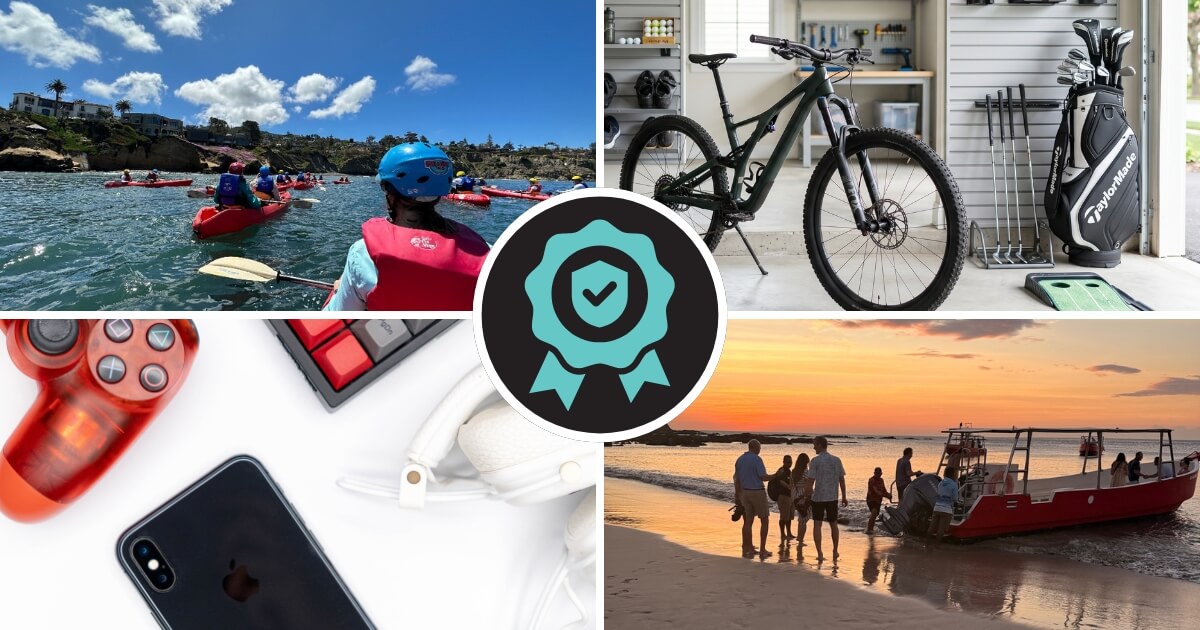
In practice, this means giving participants real choice rather than a single predetermined prize. Choice also protects flexibility on your end. Since participants see the reward and not the mechanics behind it, you can adjust program strategy over time without it ever feeling like a cutback.
Motivation Excellence Builds Personalization Into Every Incentive Program
Personalization isn’t a nice-to-have add-on. It’s the difference between a program participants tolerate and one they actively engage in.
At Motivation Excellence, we design incentive programs around your audience, data and goals, not a fixed formula.
We offer:
- Custom Incentive Programs
- Exclusive Travel Incentive Solutions
- Flexible Reward Point Programs
- Unmatched Personalized Rewards
Whether you’re running a channel partner incentive, a sales incentive program or looking to add personalized options to an existing structure, we’ll help you match rewards to what actually motivates your people.
Contact us today to start designing an incentive program built around real choice!

Types of Reward Structures for Successful Incentive Programs
When it comes to motivating your team, there are multiple reward structures to choose from within an incentive program. However, picking the wrong one is an easy way to spend budget without moving the needle for your business.
Before you build (or rebuild) a program, it helps to understand four of the basic reward structures available, how each one could benefit your business and motivate the people who mean the most to your success.
Let’s dive into reward structure basics:
Start Here: Know Your Business, Know Your People
Every incentive program comes down to two things: what you’re trying to accomplish and who you’re trying to motivate. Knowing what keeps your business and your people moving and motivated is the core of creating a good incentive program. Skip understanding either one, and even a well-funded program can fall flat.
Once those are covered, how do you choose the right way to motivate your team to achieve higher performance levels? There are a few questions worth answering first:
- What’s the goal? What are you trying to accomplish, and why? Is it measurable? Is it realistic in your timeframe? Defining clear goals will eliminate confusion down the road.
- What’s the budget? If you’re developing a new program, it’s okay to start small and grow as your participants do. If this is an existing program, leverage your existing data to determine the most bang for your buck. (Note: At Motivation Excellence, we design programs that pay for themselves.)
- Who’s the audience? Age, role, location and lifestyle all shape what feels motivating to each individual. The right personalized reward will make your people feel truly appreciated.
Once those questions are answered, the reward structure decision gets a lot easier. When you’re ready for the next step, here are four basic buckets to consider for motivating and rewarding successful behavior.
Four Reward Structures to Consider
1. Reward Point Programs
A point-based program lets participants earn points incrementally, tied to whatever behavior matters most: sales, calls, leads or another measurable action. Then, much like popular loyalty programs, your people can redeem their points for experiences, travel, merchandise, or gift cards whenever they choose, whether it’s one gigantic top-tier item or several mid- or lower-tier selections. We even offer special event tickets as part of our redemption offerings.

The appeal here is choice. Instead of one prescribed reward, participants build toward whatever motivates them personally, which tends to keep engagement higher over a longer program cycle.
Works well for:
- Sales teams and company-wide programs where sustained, everyday engagement matters
- Channel partner and distributor programs where flexibility in redemption builds loyalty over time
It’s worth noting this is different from a package-style reward, where a winner receives one curated award rather than an accumulating points balance. If an ongoing points ledger isn’t the right fit for your program, personalized reward packages are worth exploring as an alternative.
2. Travel Incentives
One of the best ways to reward your people with experiences rather than “stuff” is the travel incentive, which is often tied to larger goals over a longer period of time and awarded to an elite group of performers. Since only top performers earn a spot, the reward feels earned rather than automatic.

You choose a destination and activities that fit the culture of your business — one your participants aren’t likely to get to on their own, like:
- A group dinner at Buckingham Palace in London
- An exclusive evening at a museum in Rome
- Cocktail hour at a private estate overlooking the ocean in Hawaii (just to name a few!)
Once goals are set, either individually or as an organization, progress (sales or other metrics) can be tracked to determine eligibility for the group travel experience.
Works well for:
- Sales teams and network marketing teams chasing longer-term, higher-stakes goals
- Distributor and partner programs where an elite tier of top performers needs a standout reward
3. Motivation Excellence B2B Buying Shows
Unlike a typical trade show open to anyone who registers, a Motivation Excellence B2B buying show is an exclusive event earned by channel partners who hit specific purchasing goals.
Buying shows bring your best customers, vendor partners and company leadership into the same room for show-only deals, product showcases and high-value networking, and it’s often paired with a group travel experience to raise the stakes even further.
Because access is earned rather than open, the buying show functions as both the incentive and a relationship-building event, which is part of why it’s shown real staying power in distribution-heavy industries like building supply and construction.
Works well for:
- Distributor and dealer networks where purchasing volume drives eligibility
- Organizations looking to combine a customer loyalty push with a memorable experience
4. Cash & Bonuses
Cash is the easiest go-to format, and often the first one companies reach for. It’s simple, but it comes with trade-offs: cash blends into a paycheck fast, it’s not the most personal option, and it can be easily forgotten. It also tends to be less motivating than other more personalized, aspirational rewards.
Although cash can be an effective motivator to hit goals on a deadline, many organizations (and recipients) don’t tie this incentive to a specific goal, often relegating it to an end-of-year bonus for overall performance.
Cash works better when it’s tied to a specific goal, and recipients are encouraged to put it toward something memorable like a personal milestone or travel experience. But we all know that extra cash often gets spent on unexpected bills, gas or groceries, even with the best of intentions.
Works Well For:
- Sales teams working toward short-term targets/goals
- Company-wide programs where speed and simplicity matter more than personalization

Curious why cash isn’t always the most motivating option? Check out our article: 4 Not-So-Obvious Benefits of Non-Cash Incentive Programs for a deeper dive into the research.
Which Reward Structure is Right for You?
Now that you know the right questions to ask and the different reward structures to choose from — which one is right for you?
A sales team might run on a mix of point accrual for everyday activity and an annual travel incentive for the top-tier performers, while a distributor-facing program might pair a loyalty structure with a buying show as the earned reward. The right combination comes down to your goals, budget and what actually motivates the people you’re trying to reach.
Not sure where to start? Reach out to us, and we’ll discuss building an incentive program that fits your business, motivates your people and pays for itself through the results it drives.
Proven Benefits of Reward Point Programs That Build Valuable Channel Loyalty
When manufacturers, distributors and franchises talk about building channel loyalty, conversations often default to pricing, margins or product quality. While those factors are crucial to consider, there’s a powerful incentive that quietly outlasts all of them: a well-designed reward point program.
It’s no secret that your channel partners have choices. Lots of them. An Incentive Research Foundation’s (IRF) study, Using Incentives to Drive Pipeline, found that channel partners typically navigate between 10 and 50 incentive programs but actively participate in only about half. That means breaking through that noise takes more than a competitive rebate structure. It takes a program that earns mindshare and keeps it.
That’s exactly what Motivation Excellence’s reward point programs are designed to do.
Quick Overview
Reward point programs aren’t just nice-to-have; they’re a proven tool for building the kind of channel loyalty that directly impacts sales. Research shows that points-based programs increase engagement, boost intrinsic motivation and create an emotional pull that cash simply doesn’t replicate. Reward point programs are very flexible, budget-friendly and can be tiered with group travel incentives, too. A well-designed reward point program can be the difference between a transactional relationship and a lasting one.
The Psychology Behind Why Reward Points Work
It might seem surprising that points can outperform cash incentives, but research consistently shows they do.
IRF-backed academic research from the University of Waterloo and the University of Central Florida found that team members in organizations that use reward point programs:
- Report higher intrinsic motivation
- See improved organizational loyalty
- Have higher team engagement
- Experience greater satisfaction with their rewards and recognition compared to those without a points program
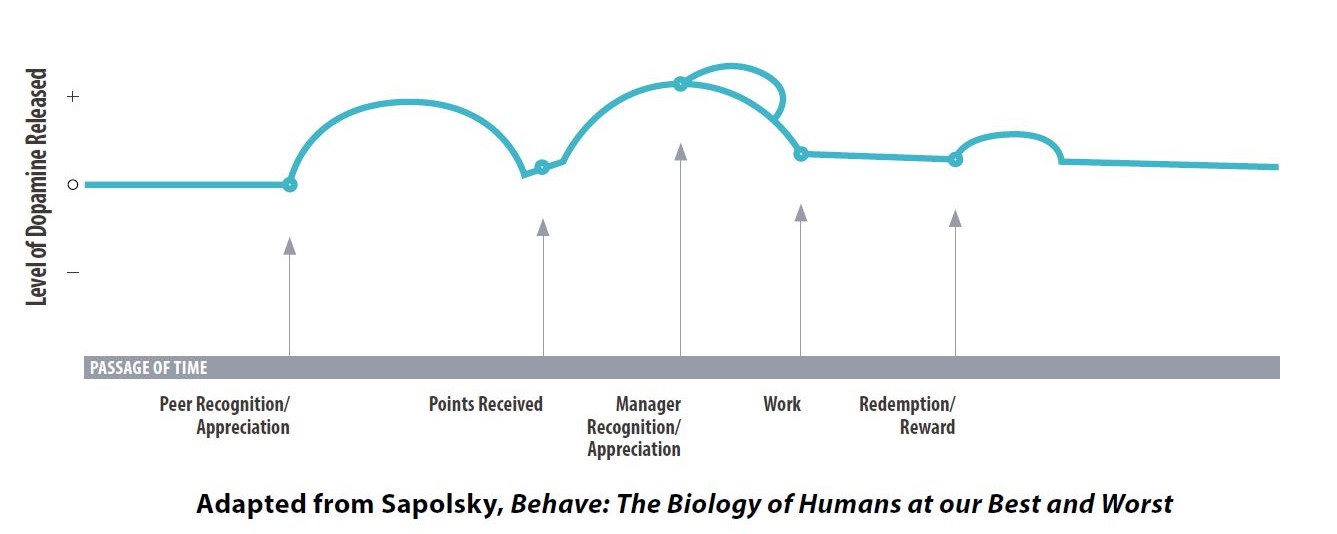
Looking at the graph above explains the true psychological science behind reward points and motivation. In practical terms, reward point programs keep people engaged in the journey, not just the destination. Every time a participant checks their balance and sees progress toward a goal, the program is working, even before a single redemption happens.
Motivation Excellence has seen this firsthand with our clients: non-cash and experiential rewards often outperform cash on sustained engagement and ROI. The question is not simply “how much” but “what kind of value” is most compelling to each partner segment.
Let’s take a look at a successful reward point program.
What This Looks Like: Successful Reward Point Programs
In a reward point program Motivation Excellence designed for a medical supply distributor, the challenge was persuading multiple non-competing suppliers to jointly fund an incentive initiative targeting their shared distribution channel. Understandably, skepticism was high.
We started with a two-year historical sales analysis, set supplier-specific growth goals tied to real performance data and built a transparent tracking portal where reps could watch their points accumulate in real time.
At the end of the program, participants received a one-time reward point payout, redeemable for name-brand merchandise, travel options, or experiences from our expansive online award offerings.
Participating suppliers increased sales by 11.75% over plan, with volume up more than $17M for selected suppliers, and the program was fully supplier-funded.
This is the success that can happen (with program ROI and channel loyalty) when a reward point program is built around real data, thoughtful rule structures and the right rewards. This is part of our program DNA, plus it helps to have meaningful personalized reward options!
The “Continuation Dilemma” & How to Beat It
You should be aware that one of the biggest risks for any incentive program is what the IRF calls the “continuation dilemma.” This refers to the phenomenon that once growth occurs, new leadership tends to treat incentive-driven performance as the new baseline, making it difficult to demonstrate continued value.
This is why the design of a reward point program matters as much as the launch of it. Programs built on transparent ROI and strategic rule structures survive leadership transitions and budget cycles, while the program continues to grow revenue each year.
At Motivation Excellence, our Performance by Design® process starts with your data:
- Historical sales performance
- Growth targets
- Audience segmentation
- Desired behaviors
The result is a program that doesn’t just feel good — it proves its value year after year. Also, you can’t forget the personalized rewards!
Build the Right Incentive Program & Improve Channel Loyalty
Reward point programs, when designed with the right data, rule structures, and top-notch rewards, are among the most durable tools for building valuable channel loyalty and long-lasting relationships.
At Motivation Excellence, we have over 40 years of expertise in creating effective data-driven loyalty and incentive programs with a long-term goal of changing buying behavior.
Our clients frequently see:
- Yearly revenue increases for the duration of the program
- Increased brand loyalty with channel partners
- Better relationships with partners who are committed to each other’s success
They see all of this, and the incremental gains often fully fund the program. We’d love to help your business with a successful channel incentive program built around your data, audience, and desired outcomes.
We invite you to learn more about our Incentive Programs and Incentive Travel Experiences, or reach out to start the conversation.
How to Drive Impact & Engagement at Your Next Meeting
Every company has meetings: some to train, some to educate, some to motivate, and some to celebrate. But in order to achieve the results you want, you must ask yourself the question: Am I driving impact and engagement with the audience that will deliver on the investment needed to host the meeting?
4 Not-So-Obvious Benefits of Non-Cash Incentive Programs
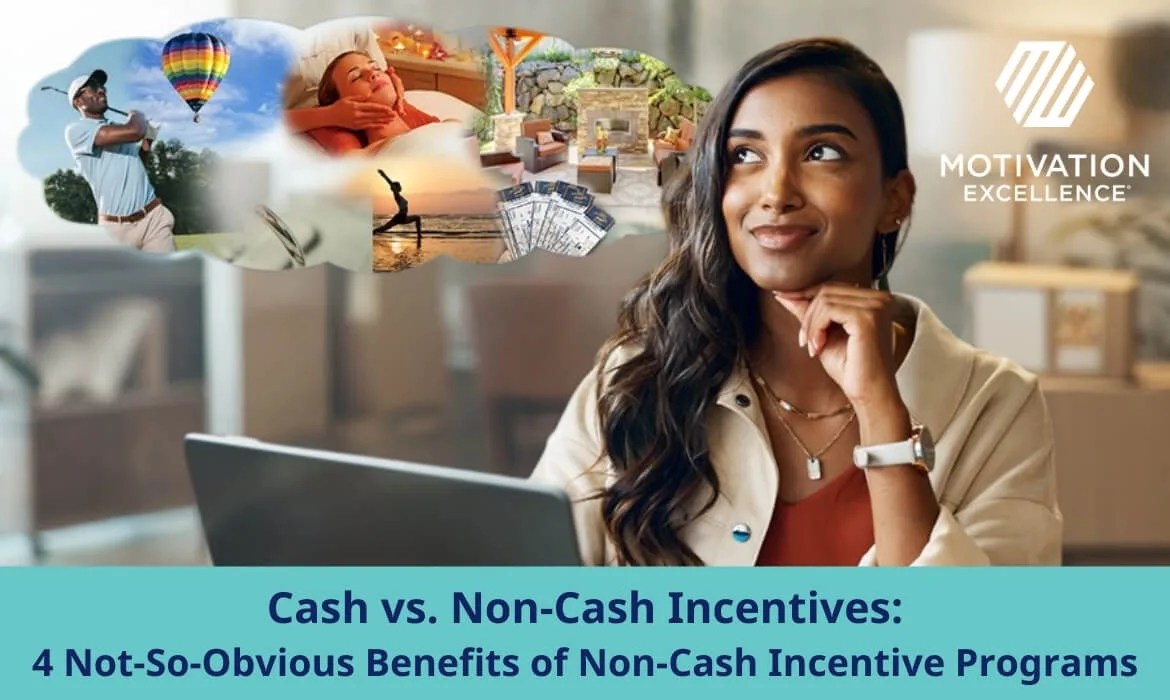
When organizations consider incentive programs, cash rewards are often top of mind. Cash bonuses feel simple, flexible and familiar (motivating the sales team with cash bonuses is a classic example). The thing is, this simplicity doesn’t always translate to sustained motivation or long-term performance.
This is where Motivation Excellence® takes a different approach with non-cash incentive programs. Instead of blending into compensation (and thus getting used for gas, bills, and groceries, most likely), our non-cash rewards create memorable experiences that stand apart from everyday income. While some participants may prefer the influx of cash, research tells a different story.
We prefer non-cash incentive programs such as personalized rewards or travel incentives because we believe they can accomplish more than their cash alternatives.
Before diving into the benefits non-cash incentives offer, let’s start with the basics. What is a non-cash incentive? And what is the difference between cash and non-cash incentives?
What is a Non-Cash Incentive?
A non-cash incentive (often tied to a group travel incentive or reward point program) is a reward that is not paid as direct money or added to a paycheck. Instead, it delivers value through experiences, tangible rewards, or personalized options that participants earn by achieving specific goals (usually tied to positive business behaviors).
Common non-cash incentives include:
- Points-based rewards programs
- Personalized rewards with endless possibilities
- Travel experiences and ticketed events
- Concierge Shopping and lifestyle purchases
- Event access or exclusive experiences
- Merchandise or experiential awards
The key difference is memorability: non-cash incentives are remembered every time someone sees their chosen reward or relives the fantastic memories from a group travel incentive. Cash rewards often become expected, not necessarily appreciated.
Cash vs. Non-Cash Incentives: What’s the Real Difference?
Cash incentives and non-cash incentives can be equal in monetary value, but they are not equal in personal impact.
Cash rewards tend to be:
- Viewed as income
- Quickly spent on necessities
- Forgotten shortly after payout
Non-cash incentives tend to be:
- Aspirational (and thus social media-worthy)
- Associated with good memories
- Motivating year after year
Research backs this up. According to the Incentive Research Foundation’s Voice of the Market study, program owners view non-cash incentives as fundamentally different from cash. Cash is seen as compensation (a baseline business transaction), while non-cash rewards are viewed as celebratory, memorable, and social. Because they stand apart from pay, non-cash incentives create enthusiasm, reinforce positive behaviors, and drive stronger performance outcomes when used in channel and sales incentive programs.
Are Non-Cash Incentives More Effective Than Cash?
Let’s look at the study by Scott Jeffrey, PhD, that analyzed the motivational factor of tangible non-cash incentives.
In this study, Dr. Jeffrey analyzed 441 call center employees over a period of two months while they worked toward a goal. 224 participants worked toward a cash incentive, while 217 participants pursued a non-cash reward of the same value. During the course of the study, participants were asked about how often they thought about the rewards of the program.
At the end of the two months, the participants pursuing a tangible, non-cash reward actually thought about their potential reward nearly 40% more than the group working for cash. That increased motivation translated into higher commitment and stronger performance.
We’ve seen this same dynamic firsthand. In a recent participant survey conducted in one of our B2B incentive programs, non-cash incentives ranked as the most motivating reward option (outperforming cash, which placed second). Programs that include personalized rewards, points-based earning, and individual travel or lifestyle awards are more motivating and net impressive ROI in our clients’ programs.
Why Cash Incentives Often Fall Short
Cash rewards absolutely have a time and place; we have never been of the “bash cash” mindset. However, over time, cash incentives often fall short on motivation.
Here are some challenges cash incentives can create:
- Expectation creep: Once cash becomes the norm, it’s expected. It’s no longer as motivating as before.
- Reward perception: A change in this reward structure can feel like a pay cut, which is never motivating.
- Hesitancy to indulge: Most people are hesitant to spend money on themselves for what they deem as luxury items. “Consumers often feel guiltiest about the things that provide them with the highest pleasure,” says Ran Kivetz, the Sidney Taurel Associate Professor of Marketing at Columbia University Graduate School of Business.
- Weaker emotional connection: Cash is less likely to create memories or produce warm feelings that lead to loyalty and the desire to help you succeed.
As a result, organizations can end up spending more without seeing meaningful behavioral change. This is where non-cash incentives have a true advantage.
4 Not-So-Obvious Benefits of Non-Cash Incentive Programs
At Motivation Excellence, we’ve seen firsthand how well-designed non-cash incentives keep program participants engaged and motivated long after a goal is achieved. While cash rewards may seem straightforward, non-cash incentive programs deliver advantages that are often overlooked.
Here are 4 not-so-obvious benefits of going beyond cash:
1. Non-Cash Incentives Add Perceived Value
Cash has a fixed value. Non-cash incentives often feel more valuable — even when they cost less.
Cash is valuable to participants. That much is true. But, cash compensation becomes expected. Therefore, it can be easily taken for granted.
Non-cash incentives are different. Participants tend to attach more value to them. For example, offer your team a 5-star travel experience, and they will associate those experiences with a higher value, even if they actually cost less than offering team members cash bonuses.
2. Create a Stronger Emotional Connection
Non-cash incentives feel intentional. They signal that thought and effort went into the reward. That personalization matters. Whether it’s a custom reward experience, a meaningful purchase, or a once-in-a-lifetime opportunity, participants associate the reward with achievement.
When participants feel valued, they are more likely to develop a positive emotional connection with their employers or distribution partners. The more personal an incentive program feels, the more successful it will be in its ability to incentivize.
3. Encourage Camaraderie Rather Than Competition
With all our experience with non-cash incentive programs, we have discovered something curious: non-cash incentives are more likely to inspire camaraderie among team members. Experience-based or points-driven programs can foster shared success.
On the other hand, cash incentives tend to foster unproductive competition. Sometimes, team members want everyone to benefit from an incentive program rather than individuals competing for a single prize.
4. Align More Naturally with Company Culture
Last but not least, non-cash incentive programs are flexible by design. They can be tailored to align with company culture to reinforce specific behaviors, values, or business goals.
Because participants focus on the reward, not the underlying cost, organizations can:
- Adjust program strategies without backlash
- Evolve incentives as goals change
- Reinforce culture through experiences and recognition
This adaptability creates the kind of long-term environment and culture an organization strives for.

Examples of Motivation Excellence’s Non-Cash Incentives
Some of the most effective non-cash rewards in our incentive programs include:
- Meaningful personalized options
- Redeeming points for nearly anything through Concierge Shopping
- Individual travel and once-in-a-lifetime events
- Group travel experiences around the world
The most successful programs allow participants to choose rewards that matter to them.
So, When Should You Consider a Non-Cash Incentive Program?
Non-cash incentives are especially effective when:
- You want to drive incremental growth, not just short-term spikes
- Your audience includes sales teams, channel partners, or independent reps
- You need flexibility to evolve program rules over time
- You want incentives that reinforce culture and relationships
Cash can motivate in the short-term, but non-cash incentives inspire year after year.
See How Non-Cash Incentives Can Motivate More Than Money
The most effective incentive programs don’t just reward outcomes — they influence behavior. While many businesses today are looking to do more with less, non-cash incentives are the clear winner as being more effective and efficient, all while providing a higher ROI than their cash counterparts.
Non-cash incentives create hopeful anticipation, emotional connection, and personal meaning that cash simply can’t replicate. If your organization is rethinking how it motivates performance, starting with non-cash incentives is a strategic choice.
Curious how a non-cash incentive program could support your business goals? Motivation Excellence designs customized incentive programs built around your data, your audience, and your desired outcomes.
We invite you to learn more about our Incentive Programs and Incentive Travel Experiences, or reach out to us today.
Independent Insurance Agents Have Options; Proven Incentive Program Strategies Help Insurance Carriers Win Loyalty
Whether they’re helping people secure their homes, wealth, businesses or cars, independent insurance agents have a huge selection of policy carriers to choose from. Independent agents write 61% of all property and casualty policies in the United States. Yet, close to half of the commercial and personal agents polled recently report they don’t feel well supported by the insurers, and roughly a quarter of both groups feel undervalued as partners.
For most carriers, selling through independent agents is the primary distribution engine. That engine is fueled by relationships. But stats show those relationships can stand to use an injection of energy through better support and impactful recognition. Making stronger connections is especially critical as agents are under pressure due to consumer expectations for speed, price, and digital convenience.
The carriers who assume loyalty will hold on their own are already losing ground, whether they realize it or not. The brands who concentrate on curating bonds that add value to a partnership will always shoot ahead.
Insurance Marketplace Consumer Behavior Is Changing
Consumer behavior has shifted. According to a 2025 U.S. Insurance Digital Experience Study, 47% of insurance policy buyers now purchase through digital channels, compared to 35% through agents. However, only 15% want a fully digital experience, while 48% want digital first with human access when needed.
Insurance shopping activity remains at historic highs. LexisNexis reports that 46.5% of auto policies were researched online before being purchased in the past 12 months. Another report shows 42% of shoppers switched carriers within 18 months.
When policyholders look at the options in the market, they often start with their own agent. Where that conversation goes depends entirely on which carriers have earned that agent’s advocacy. An agent who has earned the trust of a customer will only recommend carriers who provide the agency with support, partnership, and efficiency; All hallmarks of a strong B2B relationship.
Insurance Carriers Need to Look at Recent Survey Data
A 2025 U.S. Independent Agent Satisfaction Study analyzing nearly 7,000 agent evaluations across personal and commercial lines reveal a significant gap between what agents need and what carriers deliver:
- 44% of personal lines agents say carriers are NOT meeting their foundational needs
- 43% of commercial lines agents report the same as above
The statistics also show relevant reasons why carriers need to focus attention on showing agents they have value.
- 25% of personal lines agents feel personally undervalued by carrier partners
- 22% of commercial lines agents echo the above sentiment
- Undervalued agents are 4 – 7 times more likely to reduce business with a carrier
Finally, ease of working with a carrier can play a huge role in their satisfaction.
- 61% of all agents say it is NOT “very easy” to work with their carriers
- Agent satisfaction jumps 274 to 314 points (on a 1,000-point scale) when a carrier is “very easy” to work with
A multi-hundred-point jump signals that a fundamentally different relationship can be a great opportunity for carriers to foster. Carriers who remove drag in quoting time, underwriting responsiveness and policy service can relieve friction points. Carriers who make personal connections with independent agencies can weather friction better while increasing long-term loyalty.
One key to building stronger relationships between insurers and agents is to create a “one team” sentiment, which is something B2B incentives deliver well.
Why Incentive Programs Work in the Insurance Sector
Selling insurance takes a lot of time and energy, especially when looking at product lines that are deemed optional, like life insurance policies. Adding to the difficulty of life insurance sales, is the uncomfortable mental hill that consumers climb when thinking about their own mortality. It can feel overwhelming emotionally and financially.
One of our clients in the insurance sector runs an incentive program specifically for this product type. Between 2015 and 2025 they saw a 36% increase in median new life commissions and a double-digit percent increase in new life policies issued. National averages for both are less than 5%. Why does our client see so much more success? The group travel incentives they plan recognize the sacrifices these agents make within their own lives to make sure their clients’ are protected. That repeated message of being valued cannot be underestimated.
Agents who qualify get quality time in an amazing location with a guest, other top performers and the carrier’s executive team. As new agents qualify, they comment on the wealth of experience the incentive experience allows them to glean from other top performers. The motivation to earn year after year compounds with the number of friendships forged on each program. Agents also express appreciation for how valued the carrier makes them feel: A partnership yes, but even better, like they’re part of a family.
Investing in Middle Performers is a High Reward Prospect
Recognizing top producers is a no-brainer, but it can be an incomplete strategy, especially when looking at engaging more of an audience, rather than less. Speaking in insurance terms, top agents are not the risk. The real risk, and thus a high payoff reward, sits in the middle.
Agents who are building their books have to decide which carriers get priority. It’s this group of agents who tend to receive little engagement beyond base commission rates. And to be clear, commission is not a great motivator. Every carrier pays it. It’s an expected transaction. It does not change behavior or create interaction.
We suspect it’s this group of agents in the middle – not burning up the sales but not falling off the edge either – who are giving most of the unsatisfied ratings to carriers. Insurers who show them a reason to be loyal can quite easily jump ahead of the pack.
When industry data shows the insurance workforce skews older, and roughly half are expected to retire by 2028, the real winners among the carriers will be the ones who diversify their agent engagement strategies now, especially with this group just under the top performers.
Incentive Programs for Support Staff Compound Results
Another forgotten, but important group to look at engaging, is the team that supports the agency principal. Customer Service Reps and administration staff help generate quotes, manage client interactions, and determine which carrier options to consider early in the sales process. CSRs make up roughly half of all agency employees and can be key to customer retention.
Finally, a carrier should be looking at how best to motivate their own support staff to help mitigate any drag an agent might experience. This point of contact person can also be a cheerleader for the incentive program with the agents they work with. This internal incentive can track touchpoints with agents, measure KPIs to ensure efficiencies and reward those who are driving the program goals.
One strategy to recognize and motivate the middle performers and support teams is to look at tiered rewards. Combining a points program with a more exclusive travel program gives carriers the opportunity to recognize all the people who make decisions that benefit their bottom line. Rule structures that reward at goal but also give a path to earn even more at percentages over goal, set up valuable behavior changes. This is also a great way to start a relationship that has the potential to turn into long-term partnerships, since today’s support staff could be tomorrow’s top performing agents. Internally, offering individual and team rewards, even giving one or two of the high achievers a spot on a travel program can influence behavior change that amplifies amazing customer service.
Finding an Incentive Program Strategic Partner
Agent distribution remains powerful. The advice, trust, and local presence agents provide cannot be replicated digitally. But that advantage only matters when carriers make it easy and rewarding for agents to do their best work.
At Motivation Excellence, we have more than 40 years’ experience helping businesses build engagement strategies that recognize the influence of distribution channel partners. By recognizing producers and CSRs, we help carriers move beyond compensation and toward true behavior change, shaping agent preference and driving measurable growth across the distribution network. We are happy to have a free strategy session to discuss the unique goals and opportunities you have to grow your insurance business.

How Trade & Buying Shows Help Distributors Build Contractor Loyalty
Wondering how to increase contractor loyalty in your industrial sector? Then you’re in the right place. Contractor loyalty isn’t built through chance encounters or occasional promotions; it grows when distributors deliver consistent value.
From building supplies to electrical and HVAC sectors, channel behavior shows the same truth: contractors stay loyal to the distributors who make their work easier, help them stay informed, and treat them like valued partners— not just transactions.
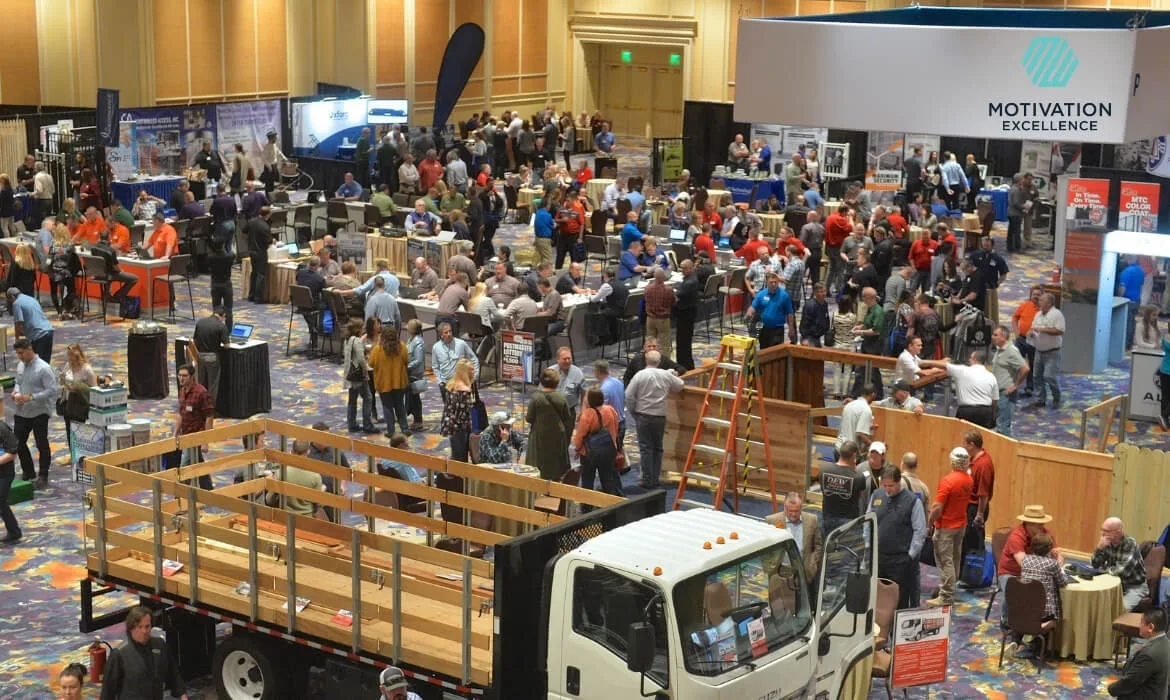
One of the most effective ways distributors can strengthen B2B loyalty is through Trade & Buying Shows. When these events are intentionally designed (with clear goals, targeted engagement campaigns, programming, and seamless execution), they become more powerful than a marketing tactic. They become a relationship-building engine.
Here at Motivation Excellence, we help distributors create Trade & Buying Shows that do exactly that. Unlike traditional trade shows, which are often open-registration events, Motivation Excellence Buying Shows are invite-only experiences earned by contractors who achieve specific purchasing or performance goals through an incentive rule structure.
In this article, we’ll explain how Trade & Buying Shows build B2B loyalty, deliver value for distributors and their partners, and create experiences contractors want to return to year after year.
So let’s break down exactly how Trade & Buying Shows build contractor loyalty.
How Trade & Buying Shows Help Build Contractor Loyalty
When distributors look for answers on how to gain contractor loyalty or what drives it, the answers all point to the same core principles. These principles include ways Trade & Buying Shows build loyalty:
- They give contractors consistent, tangible value
- They add meaningful engagement and sales opportunities for distributors and valued vendor partners
- They create clear reasons for contractors to continue choosing your brand over competitors
Customer loyalty is shaped by trust, relationship strength, access to deals, and a sense that the distributor is invested in a contractor’s long-term success. In fact, research shows that 76% of trade show participants remember the companies they interacted with at trade shows, making brand awareness an impactful benefit to these events (Plus, they’re just plain fun!).

A well-designed Buying Show is one of the most effective contractor loyalty strategies available because it delivers the value and partnership that contractors consistently say they want.
But there is a key difference between what you might consider a normal trade show experience and a Motivation Excellence “Buying Show.” Let’s break this down even further.
The Benefits of Buying Shows for Distributors

To further clarify, Motivation Excellence’s Buying Shows are invite-only and are tied to a B2B incentive. Our clients’ Buying Shows are a reward for their top-performing customers enrolled in a loyalty-generating incentive program who have achieved their purchasing goal.
The actual Buying Show Incentive Travel experience is lots of fun, but the groundwork for that event starts long before a participant qualifies. We work with our clients to create incentive rule structures that protect ROI while encouraging year-over-year growth. Our custom-designed online platforms provide instant performance-to-goal updates for each participant throughout the program period. Engagement strategies from videos to training sessions to emails to mailings, keep the program and its goals top of mind leading up to the final qualification deadline.
Furthermore, Buying Shows creates custom experiences where distributors can:
1. Strengthen Relationships & Generate High-Quality Leads
Buying Shows are a reward for contractors enrolled in an incentive or loyalty program who have achieved defined purchasing goals.
Because attendance is earned, Buying Shows bring together top-performing contractors, distributor leadership, and valued supplier partners in a more intentional environment. Conversations are more focused, engagement is deeper, and relationships move faster. People still want face-to-face interactions!
While traditional trade show data shows that 81% of attendees have purchasing power (Trade Show News Network), Buying Shows elevate this advantage by ensuring attendees are already invested in the partnership—leading to stronger relationships and, in many cases, continued incremental growth opportunities.
2. Be a Trusted Industry Partner
While research from the Center for Exhibition Industry Research (CEIR) shows that many trade show participants attend to see new products, Buying Show participants are motivated by something more.
Buying Shows provide access to valued supplier partners, distributor executives, and peer networking with other successful business owners. Participants still benefit from new product insights and show-only opportunities, but the deeper value comes from meaningful interaction in a curated setting.
Contractors value knowledgeable distributors who help them stay informed on:
- New products
- New service offerings
- Code changes
- Installation best practices
- Price trends
- Marketing insights
- Best business practices, and more
This positions the distributor not just as a supplier, but as a trusted industry partner invested in long-term success.
3. Offer Exclusive Value Contractors Can’t Get Elsewhere
Our Buying Shows can deliver exclusive benefits such as:
- All expenses paid experiences that include activity options
- Special pricing deals
- Early access to new products
- Hands-on demos
- Training sessions
- Meet-the-team and networking opportunities
- Show-only promotions or points acceleration
- Recognition for top customers
- Top-name entertainment and fun events
These exclusive, earned experiences are why participants return year after year. We have one client who tells us that at the end of each earning period, they have contractors calling in daily to make sure they’re in a top spot to return!
4. Encourage Behavior Change & Sales Growth
Buying Shows can directly impact purchasing patterns by:
- Introducing new SKUs
- Encouraging bundled or category growth
- Promoting limited-time show offers
- Reinforcing incremental buying behavior
Contractor loyalty grows when your brand is associated with real, tangible value.
5. Bonus: Combining Buying Shows with Incentive Travel
For distributors looking to take contractor loyalty even further, combining buying shows with an incentive travel experience is incomparable.
Motivation Excellence currently partners with a leading fencing manufacturer in an ongoing, multi-year program designed to transform contractor engagement. Contractors who achieve personalized growth goals earn access to an exclusive travel experience that includes a Buying Show after each program period ends.
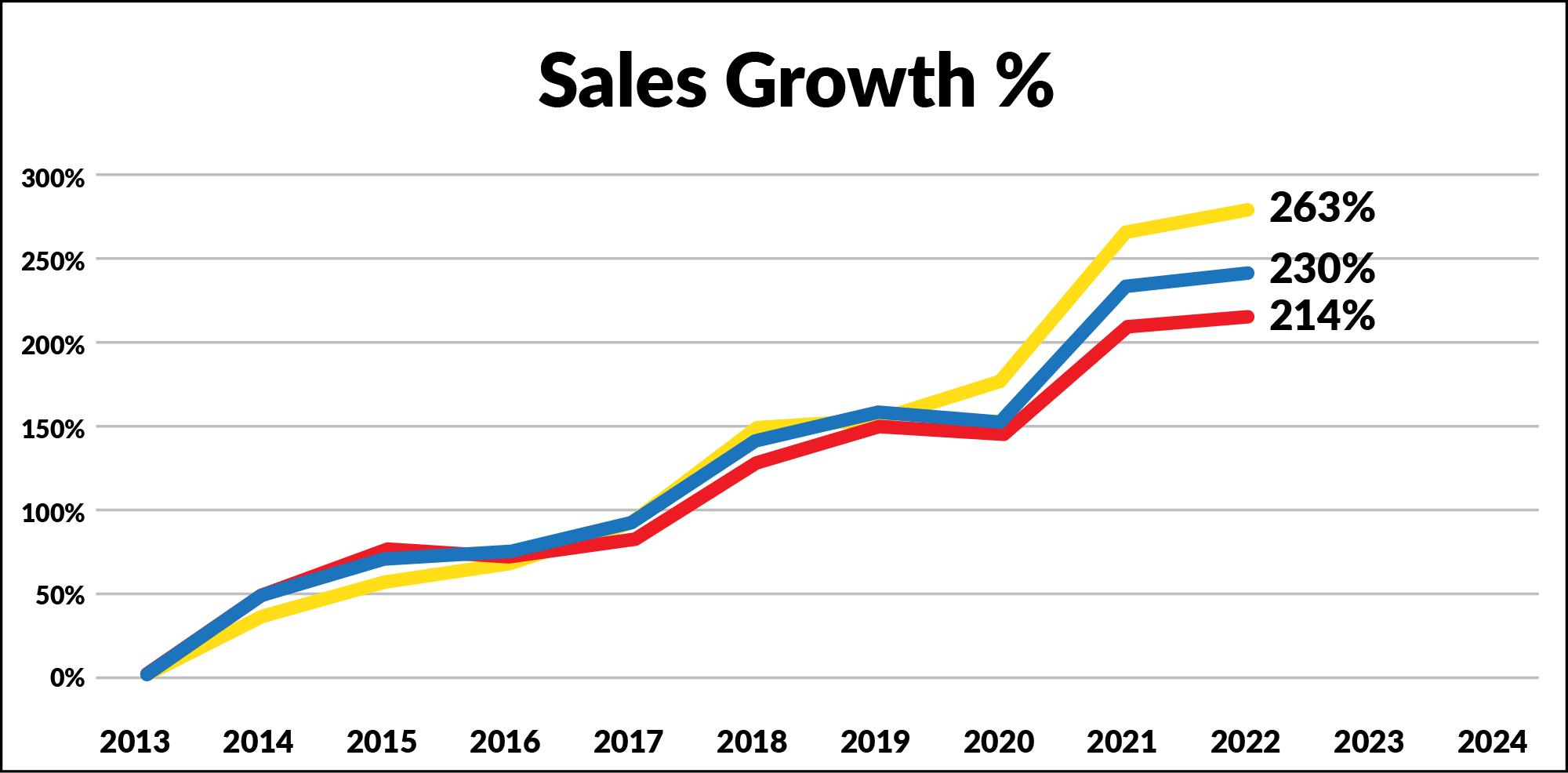
To illustrate the impact of this ongoing program, the chart above highlights sales growth trends across participating contractors over time:
- The red line (214%) represents the median sales growth, showing the performance of the typical program participant
- The blue line (230%) reflects average sales growth across all participants, indicating a great overall lift driven by the program
- The yellow line (263%) represents the top 25% of performers, demonstrating how high-achieving contractors significantly accelerate growth when Buying Shows and incentive travel are tied directly to personalized performance goals.
This is loyalty in action, directly tied to business outcomes. You can learn more about our Buying Show and Group Travel Incentive Program case study here. We’ll be updating their results soon with data from the last two-year program that ended in November of 2025.
How Motivation Excellence Helps with Trade & Buying Shows
Many distributors can simply host an event. Motivation Excellence creates strategically designed, unforgettable experiences that support business goals and strengthen channel relationships.
We provide end-to-end event management and execution. Your team doesn’t just need an event vendor. You need a partner who can:
- Understand channel dynamics
- Design a clear event strategy tied to business outcomes
- Create a custom rules structure for loyalty or incentive programs
- Manage creative communication and marketing support
- Handle all registration, travel arrangements, and hotel bookings
- Coordinate exhibitor and supplier logistics
- Bring in top-name talent for keynote speakers and entertainment
- Manage every detail on-site with full-service event staff
- Demonstrate ROI with meaningful metrics
And when Buying Shows are part of a larger incentive strategy, our custom framework provides financial modeling, goal-setting structures, and data analysis.
How Motivation Excellence Helps You Measure Loyalty Outcomes
A successful event doesn’t end when the doors close. Distributors need clear insight into how the experience influenced contractor behavior and where future opportunities exist.
Motivation Excellence builds measurement into the foundation of every program (when paired with our complimentary Performance by Design®). We track:
- Attendance analytics
- Product and brand interest
- On-site purchasing behavior
- Participant feedback
- Engagement before, during, and after the event
- Upsell opportunities
- Future event planning insights
This data-driven approach helps your team understand exactly how Trade & Buying Shows influence loyalty and growth.
Ready to Improve Contractor Loyalty?
Motivation Excellence acts as your strategic partner with flexible, data-driven solutions that support your goals, customers, and long-term growth.
You bring the contractors. We’ll bring the strategy, design, engagement tools, and seamless execution. Together, let’s build loyalty that lasts.
Reach out to Motivation Excellence to start designing your next Buying Show. Or explore our Travel & Event services and Incentive Programs & Rewards to learn about the best solution for your business.

